Dust Mites in Your Couch: Where They Hide and What Actually Helps
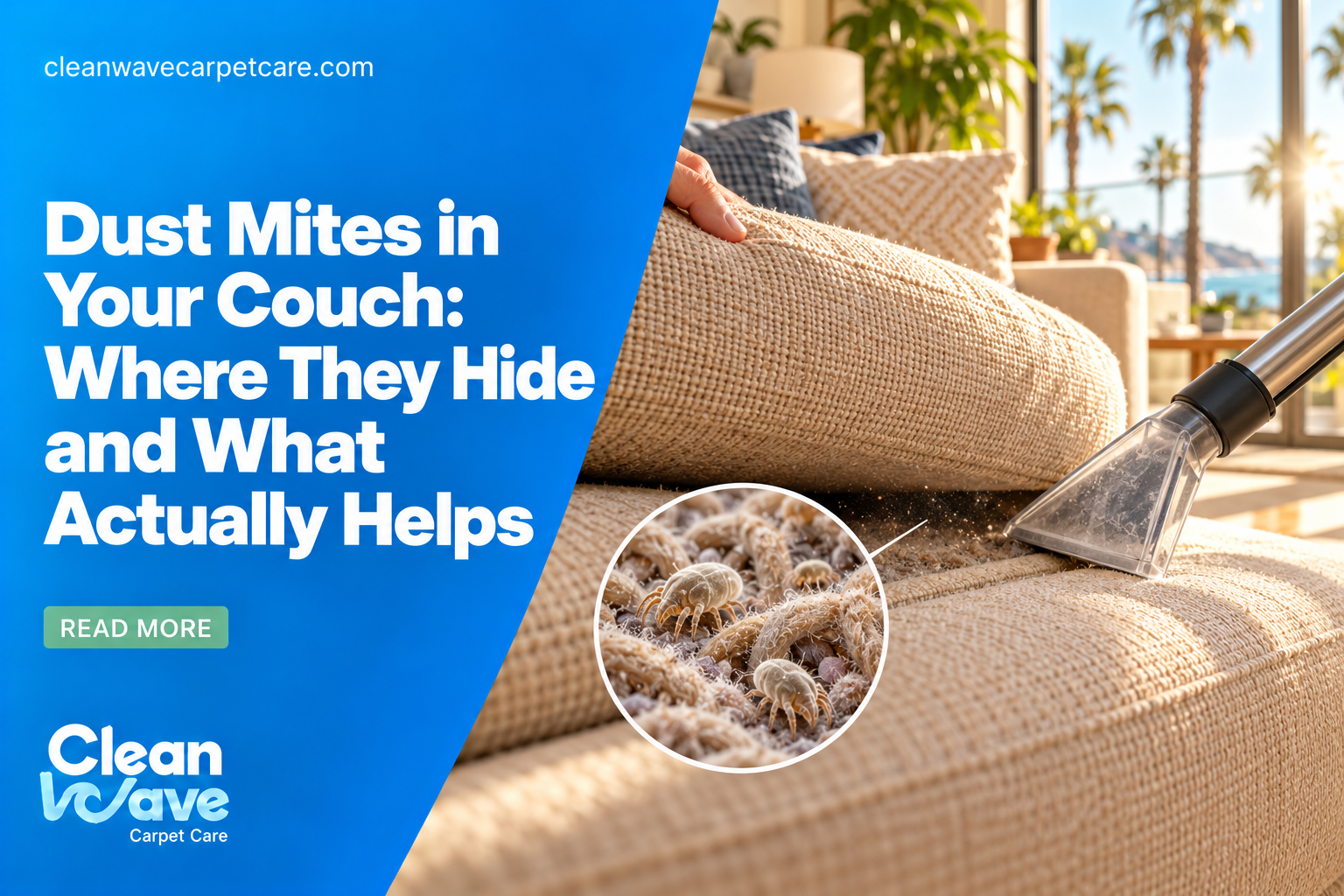
Quick answer: Yes, a couch can hold dust mites. They are microscopic, they feed mostly on shed skin flakes, they like humidity above 50%, and the Asthma and Allergy Foundation of America (AAFA) says they live deep inside the stuffing of sofas and other fabric items. A household vacuum helps with the surface, but it does not reach the padding, so reducing mites comes down to managing three things you can influence: what they eat, how humid the room is and how much old material stays in the fabric.
This guide explains what lives in a sofa, why it gets there and which habits make a real difference, based on AAFA, National Jewish Health and the National Institute of Environmental Health Sciences (NIEHS). It includes observations from Cesar Scalea, owner of Clean Wave Carpet Care, an upholstery and carpet cleaning company in San Diego. It is general information and not medical advice.
What dust mites are, and what they eat
NIEHS describes dust mites as microscopic, insect-like pests that commonly live in house dust. They do not bite. They eat the skin flakes that people and pets shed every day, and AAFA says people shed enough tiny flakes daily to keep them fed. The allergy comes from the mites themselves and their droppings, not from dirt in the ordinary sense.
Why a couch is a good home for mites
A couch combines the three things mites need: a steady supply of skin flakes from people and pets sitting on it, soft padding that holds warmth and moisture, and very little disturbance. AAFA names fabric-covered furniture as a favored spot and says mites live deep inside the stuffing of sofas, chairs, mattresses, pillows and carpeting.
That depth matters. What you see on the surface is a small part of what the cushion holds.
“People think of a couch as furniture. Bodies think of it as a place to sit for hours, which is why it collects what a bed collects: skin, hair, oils and moisture. Most of that sits below anything you can see, and that is why a couch can look clean and still not be.”
Cesar Scalea, Owner, Clean Wave Carpet Care
The humidity connection
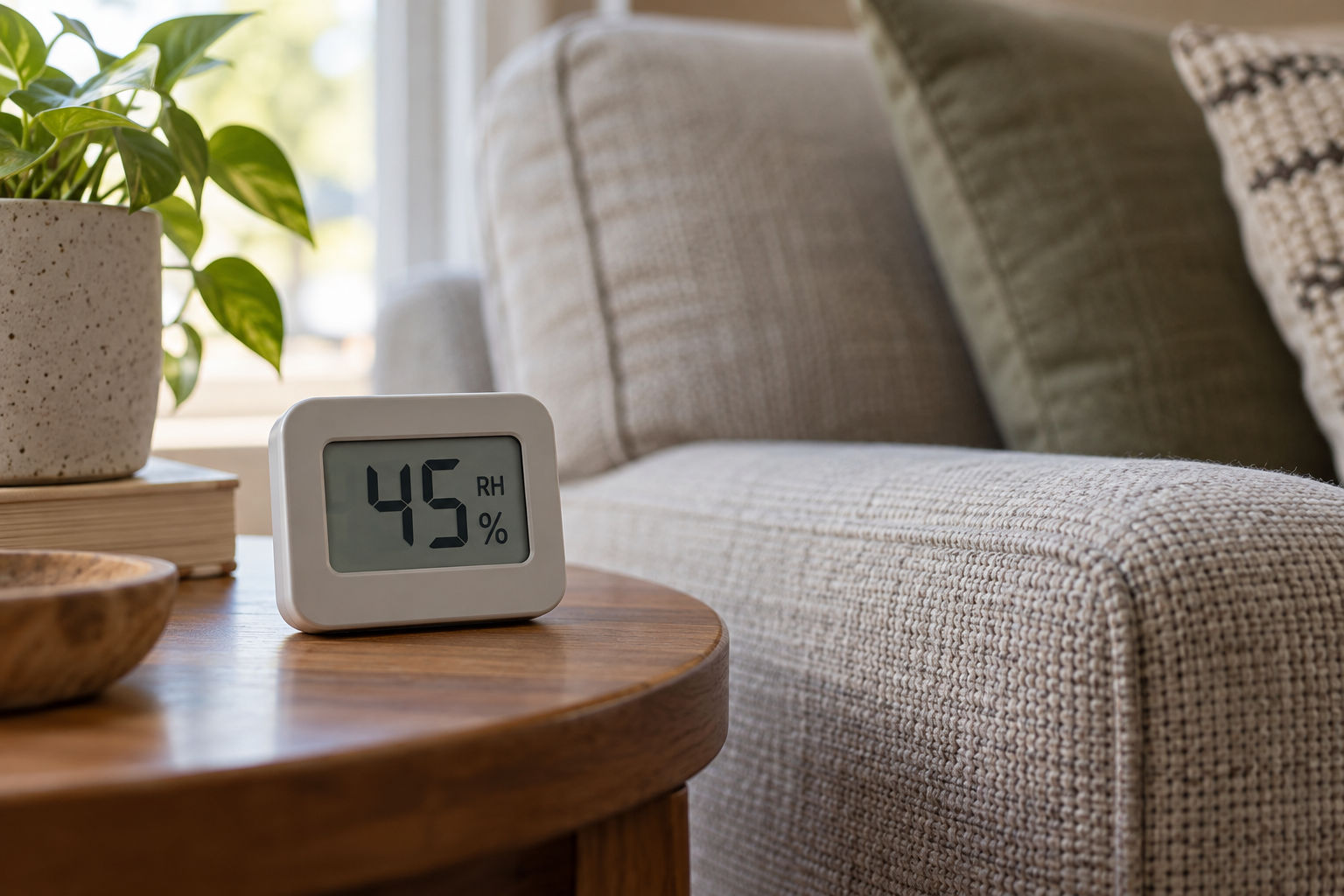
AAFA says mites like humidity levels above 50% and do best around 70°F and above. It advises keeping indoor humidity between 30 and 50%, and National Jewish Health suggests an ideal of 30 to 40%, with an air conditioner or dehumidifier where the climate is warm and a warning against humidifiers and vaporizers.
For a San Diego home that is worth a quick check. Coastal air carries moisture, and a house that is closed up on a damp morning can sit above that range without anyone noticing. A small hygrometer shows the real number in the room where the couch sits, which is better than guessing.
The Couch Mite Lever Map
The table below turns the sources into four levers and shows how much of each one you can actually control on a sofa. It is an original summary prepared by Clean Wave Carpet Care from AAFA, National Jewish Health and NIEHS, not a measured dataset.
Lever | What the sources say | What you can control on a couch | Realistic action |
1. Food | Mites feed on shed skin flakes from people and pets (AAFA, NIEHS) | How much skin, oil and soil builds up in the fabric | Vacuum regularly, wash throws and removable covers when the label allows, deep clean the fabric from time to time |
2. Moisture | Mites like humidity above 50%; AAFA advises 30 to 50%, National Jewish Health 30 to 40% | Indoor humidity in the room | Use a hygrometer, run air conditioning or a dehumidifier if needed, avoid humidifiers and vaporizers |
3. Habitat | Mites live deep inside the stuffing of sofas and other fabric items (AAFA) | Only partly: you cannot remove the padding, but you can choose what covers it | Prefer washable covers, and consider leather or vinyl where it suits the room, as National Jewish Health suggests for bedrooms |
4. Leftovers | Dead mites and droppings can keep causing reactions for weeks or months (AAFA) | How much old material stays in the fabric | Remove material rather than only treating it, and ask an allergist how to handle sensitivity |
Source: Clean Wave Carpet Care summary of AAFA, National Jewish Health and NIEHS guidance. The allergy organizations' recommendations differ slightly on humidity (30 to 50% vs. 30 to 40%), so both are shown.
What each habit can and cannot do
Most advice gives a list of habits without saying where each one stops. The table below does that, which helps when deciding what is worth the effort.
Habit | What it does well | What it cannot do |
Weekly HEPA vacuuming | Removes surface dust and loose skin flakes; recommended by AAFA | Does not reach deep into the padding, and AAFA says it will not remove all mites |
Humidity control | Makes the room less comfortable for mites; the most direct lever on the moisture side | Does not remove the mites or material already in the fabric |
Washing removable covers | Removes soil from fabric that can be laundered safely | Not every cover can be washed; hot water can damage many upholstery fabrics, so check the label first |
Professional upholstery cleaning | Reaches deeper into the fabric than a household vacuum and reduces oils and soil, matched to the fabric code | Is not a medical treatment, and the sources reviewed do not say it eliminates mites |
Choosing hard, wipeable surfaces | Leaves less for mites to live in; suggested by National Jewish Health for bedrooms | Not practical or desirable for every room |
Source: Clean Wave Carpet Care summary. Vacuuming and humidity points are from AAFA and National Jewish Health. The professional cleaning row reflects Clean Wave's description of its own work and is not a claim made by the allergy organizations.
Where vacuuming ends and fabric care begins
AAFA recommends a weekly vacuum with a HEPA filter and is direct about the limit: vacuuming alone will not remove all mites. A vacuum pulls loose material from the top of the fabric, and the padding underneath stays largely untouched.
“A vacuum is a good habit and we recommend it. It just works on the surface. The material that matters for mites sits in the fabric and padding, which is the part nobody can see or reach with a household tool. That is also why we are careful about what we promise: we can reduce what builds up in the fabric, but we do not treat an allergy.”
Cesar Scalea, Owner, Clean Wave Carpet Care
Washing is the other obvious step, with a catch. The 130°F water AAFA recommends is for bedding, and many upholstery fabrics cannot take it. Cleaning codes on the furniture tag say what each fabric tolerates, and this guide to upholstery cleaning codes explains them. For the risks of wet cleaning a sofa yourself, see what actually goes wrong in a DIY sofa clean.
What helps, in order of effort
- Check the humidity in the room with a hygrometer and keep it in the 30 to 50% range where you can.
- Vacuum the couch regularly with a HEPA-filter vacuum, using the upholstery attachment and getting into seams and under cushions.
- Wash throws, pillow covers and removable covers when the care label allows it.
- Reduce clutter and soft items around the couch that also hold skin flakes.
- If someone in the household has a dust mite allergy, ask their allergist what is appropriate for the living room. National Jewish Health suggests hard furniture in the bedroom, and the right level of change depends on the person.
What a vacuum can't reach, and why a deeper clean is worth it
If a couch has years of daily use, pets, or a household member who is sensitive to dust, the part that a vacuum cannot reach is the part that matters most. A professional upholstery cleaning matched to the fabric code reaches deeper into the fabric than household tools and reduces the oils and soil that mites feed on. It is not a medical treatment, and the sources reviewed for this article do not say that it eliminates mites.
If you are comparing companies for this, this guide to choosing a cleaning company in San Diego lists what to ask before you book. If you would like someone to look at your couch and tell you plainly what cleaning can and cannot do for it, Clean Wave offers upholstery cleaning in San Diego with free estimates.
Frequently Asked Questions
Very likely some, yes. The Asthma and Allergy Foundation of America says dust mites live deep inside the stuffing of sofas, chairs, mattresses, pillows and carpeting, and it names fabric-covered furniture as a favored spot. They are microscopic, so you cannot see them. How many a particular couch holds depends on the soil, the humidity and the household.
Mostly shed skin. AAFA says they feed on the tiny flakes of human skin people shed each day, and the National Institute of Environmental Health Sciences adds that they eat shed skin from pets too. A couch where people and pets spend hours every day collects a steady supply.
Above 50%, according to AAFA, and they do best in warm conditions around 70°F and above. AAFA advises keeping indoor humidity between 30 and 50%, while National Jewish Health suggests 30 to 40%. An inexpensive hygrometer will tell you where your home actually sits.
It helps, but it does not finish the job. AAFA recommends weekly vacuuming with a HEPA-filter vacuum and also says vacuuming alone will not remove all mites. A household vacuum works on the surface of the fabric, while mites live deeper in the padding. Someone with a dust mite allergy should not be in the room while it is vacuumed, according to National Jewish Health.
None of the allergy sources reviewed for this article say that upholstery cleaning eliminates mites, so it would be wrong to promise that. What cleaning can do is reduce the skin flakes, oils and soil that mites feed on, and it reaches deeper into the fabric than a household vacuum. Treat it as one part of a routine that also includes humidity control, not as a medical treatment.
That is a question for your allergist. National Jewish Health suggests wood, leather or vinyl furniture instead of upholstered furniture in the bedroom, which shows that hard, wipeable surfaces are easier to manage, but advice for living rooms depends on how sensitive the person is and how the room is used.
Only if the care label says you can. The 130°F water that AAFA recommends is for bedding, and many upholstery fabrics will shrink, bleed or lose their finish in hot water. Check the cleaning code on the tag first, and if you are unsure, this guide to upholstery cleaning codes explains what each one allows.
Need Professional Help?
CleanWave provides expert cleaning services across San Diego County. Let us take care of your home today.
Get a Fast Quote