What's the Fastest Way to Clean a Fabric Sofa? (Practical Guide 2026)

Quick answer: There's a quick routine people try at home, vacuum, test a cleaner, treat the mark, let it dry, but fabric is far less forgiving than carpet if any of those steps go wrong. A misjudged cleaner, a skipped test, or rushing the dry can leave a permanent water ring, a bleached spot, or a smell that's harder to undo than the original dirt ever was. Unlike carpet, a damaged sofa cushion usually can't be reset, the fabric itself is what's damaged. For anything beyond light surface dust, the safer and genuinely faster path is having it done once by someone who does this daily.
This isn't about the method being impossible to pull off. It's about how much room for error there actually is, and whether that risk is worth taking on furniture that's expensive and awkward to replace.
Why fabric doesn't give you a second try the way carpet does
Carpet can usually take a wrong move and still be salvaged. Fabric upholstery often can't. Treating a spot before vacuuming pushes loose dirt deeper into the fibers. Skipping the hidden-area test means the first place a cleaner gets tried is the most visible cushion on the sofa, in full view, with no undo button. Not drying fully invites a musty smell that's harder to fix than the dirt was, sometimes requiring the cushion foam itself to be addressed.
"The sofas that come out looking worse after a DIY attempt almost never had the wrong product used on them. It's usually that a step got skipped, most often the test spot or letting it dry all the way before using it again. And on fabric, unlike carpet, that mistake is frequently permanent. We can't always undo a water ring or a bleached spot once it's there." - Cesar Scalea, Owner, Clean Wave Carpet Care
If you're going to attempt it yourself, here's where it usually goes wrong
This isn't a method Clean Wave Carpet Care recommends over professional cleaning, it's what to know if you're going to try it anyway, so the attempt doesn't cost more than it saves. Each step below is also where most DIY mistakes on fabric actually happen.
Step | What People Usually Get Wrong | Real Risk |
1. Vacuum | Skipped or rushed before treating a mark | Loose dirt gets pushed deeper into the fibers by whatever's used next |
2. Spot-test | Skipped entirely to save time | The first real test of a cleaner ends up being the visible cushion, with no undo |
3. Treat | Rubbing instead of blotting, or over-applying product | The mark spreads, or residue is left behind that attracts dirt faster |
4. Dry | Sitting or replacing cushions before fully dry | Trapped moisture, a musty smell that can reach the cushion foam |
Source: common DIY mistake patterns observed by Clean Wave Carpet Care across San Diego upholstery cleaning calls.
Step 1: Vacuum everything first
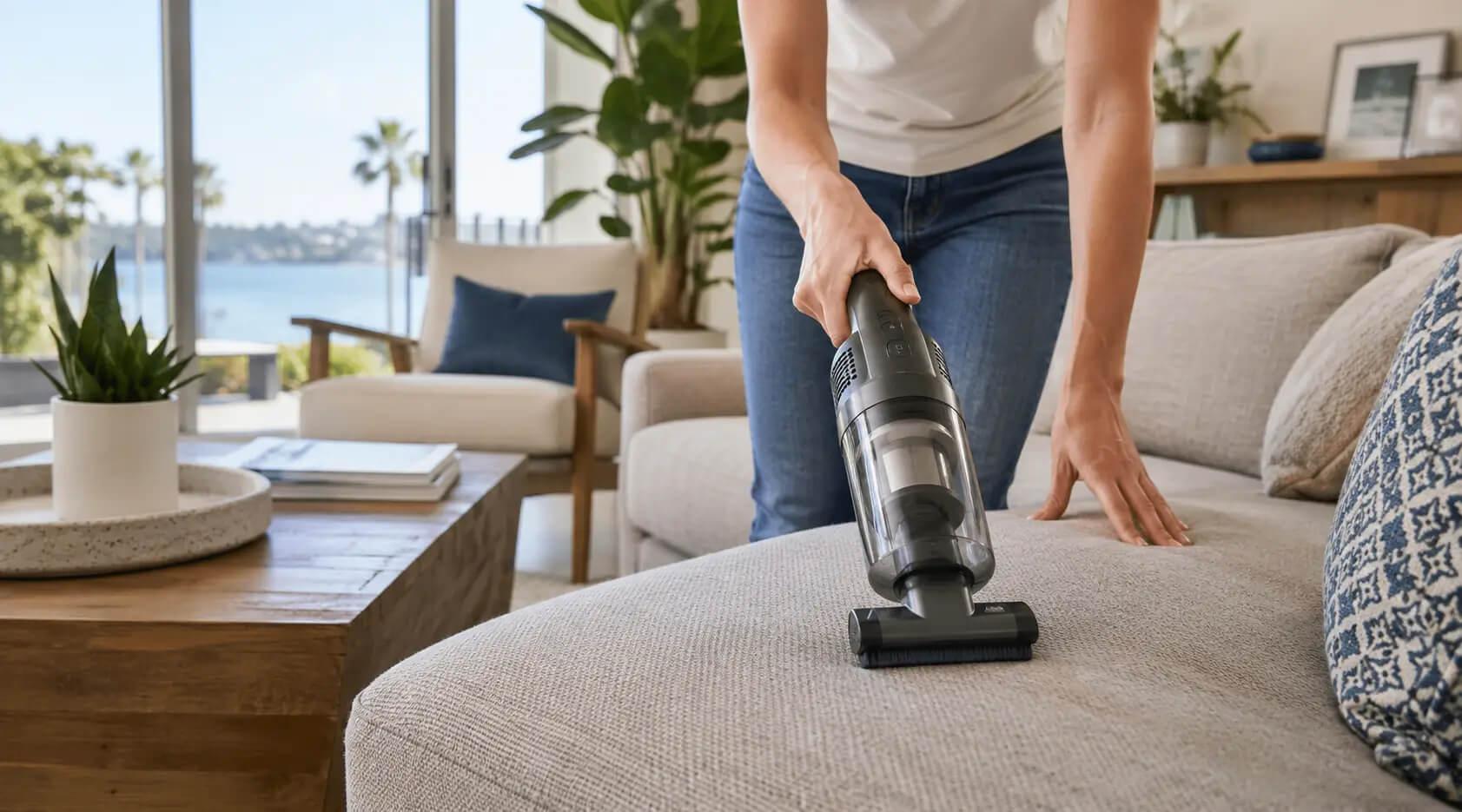
Remove cushions and vacuum the sofa body, the crevices, and both sides of each cushion with an upholstery attachment. Skipping this step is one of the most common reasons a DIY attempt makes things worse instead of better, since anything applied afterward just pushes loose dirt further into the weave.
Step 2: Check the fabric code, then spot-test, and don't skip this
Before any cleaner touches visible fabric, check the cleaning code tag if one is present, and test the cleaner on a hidden area like the back panel or underside of a cushion. This is the step people skip most often when they're in a hurry, and it's also the one most likely to prevent permanent damage. A full breakdown of what each code allows lives in this guide to upholstery cleaning codes.
Step 3: Treat visible dirt, and know that rubbing usually makes it worse
Blotting from the outside of the mark inward is safer than rubbing, but even blotting carries risk if the wrong cleaner was used or too much product was applied. There's no reliable way to know how a fabric will react until it's already happened.
Step 4: Dry completely, and budget more time than feels necessary
Sitting on a sofa that hasn't dried fully, or replacing cushions too early, traps moisture and is one of the more common causes of a musty smell that shows up days later, sometimes requiring more than surface cleaning to resolve.
What DIY won't fix, no matter how carefully it's done
- A fresh spill that needs to be blotted immediately, not worked through a multi-step routine
- A stain that's already set or been treated once with the wrong product
- Deep, embedded odor from pets or long-term use
- Code X or unmarked fabric, where liquid cleaners shouldn't be used at all without professional guidance
- Allergen and dust mite buildup that vacuuming alone doesn't fully remove
For an active spill, speed matters more than the steps above, since the goal is to blot immediately rather than wait. For general stain response and what to reach for depending on what caused the mark, see My Upholstery Got Dirty, What to Do?.
Why "doing it more carefully" isn't the same as doing it right
Even a DIY attempt done as carefully as possible doesn't replace a periodic professional deep clean, which reaches oils and allergens that surface vacuuming and light spot-treatment can't touch, without the risk of a permanent mistake along the way. Most households do well with a professional deep clean roughly once or twice a year, more often with pets, kids, or heavy daily use.
"A careful DIY attempt keeps a sofa looking okay between visits, it's not a substitute for a deep clean, and it's not without risk either. We see the difference every time we do a deep clean on a sofa that's only ever been handled at home. There's a layer of buildup underneath that surface cleaning never reaches, and sometimes there's also damage from an earlier attempt that we're working around." - Cesar Scalea
What a fast clean can never reach, no matter how well it's done
It's worth being honest about something: even a DIY attempt done exactly right, in the right order with the right product, is still a surface-level intervention. That's not a flaw specific to doing it poorly, it's a limit built into what a vacuum and a spot-treatment can physically do, on top of the real risk of it not going exactly right.
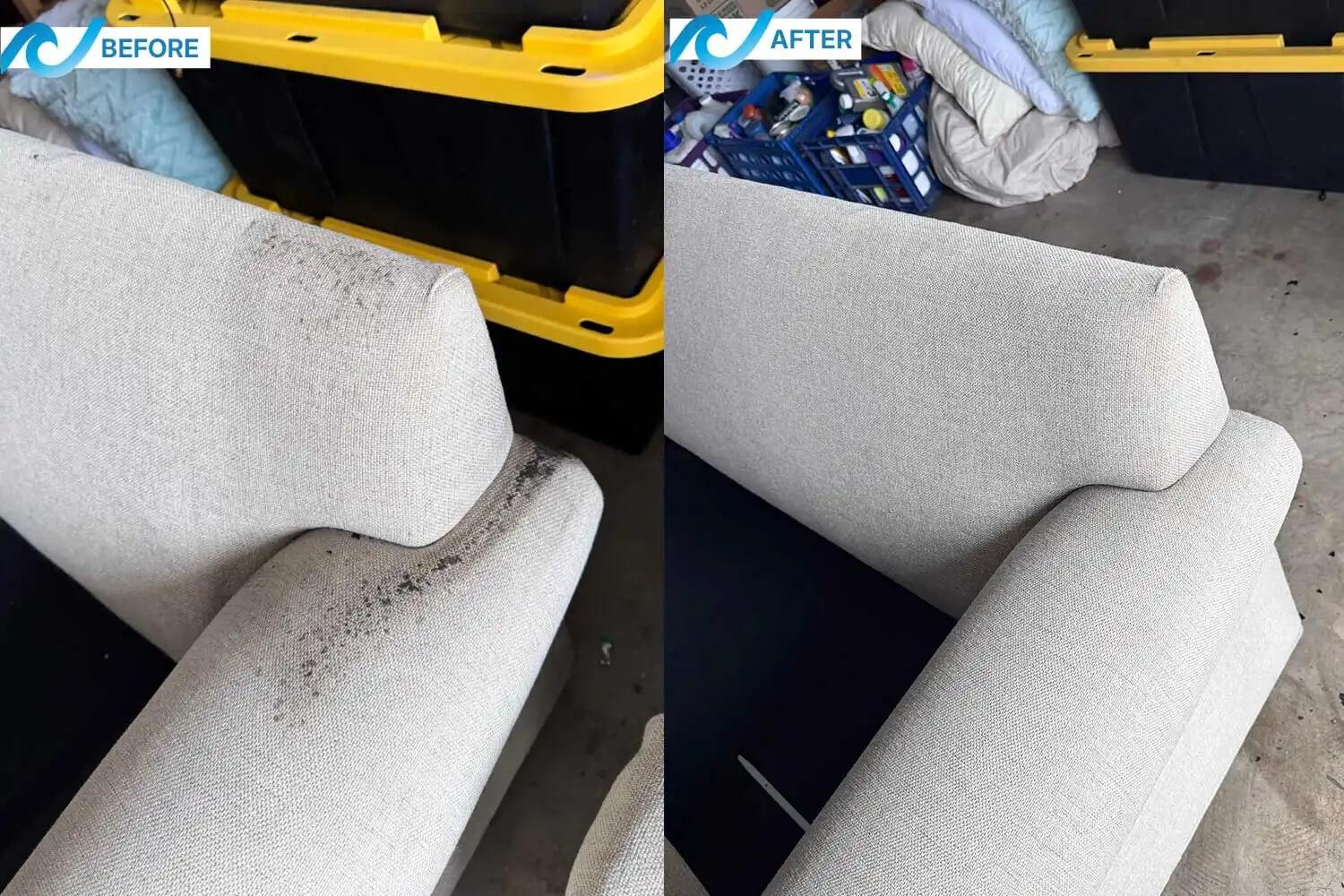
Household vacuums and surface cleaning reach the top layer of a fabric's pile. They don't reach oils that have worked into the fiber from repeated skin contact, or the allergens and dust mites that settle below the surface over months of normal use. They don't restore fibers that have started to mat down from foot and body pressure in the same spots, day after day. And they can't tell you, the way a trained eye can, whether a fabric is starting to wear thin in a way that a different cleaning approach could have slowed down.
"A fast clean and a professional deep clean aren't really competing with each other, they're doing two different jobs. One keeps the surface looking good between visits. The other is reaching things a vacuum was never built to reach in the first place. People sometimes assume if the sofa looks clean, it is clean, and those aren't always the same thing." - Cesar Scalea
This is less about which method is "better" and more about recognizing what each one is actually capable of, and what it risks. A homeowner who tries the DIY version isn't doing anything unreasonable. But it's worth being honest that the margin for error on fabric is thin, and a mistake there is usually not something a second attempt can fix.
Why most people are better off skipping the DIY risk entirely
If the fabric is code X, the tag is missing, or a mark has already been treated once and made worse, a second DIY attempt is rarely the right move. Even outside those cases, the honest tradeoff is a few dollars in cleaning supplies against the real chance of a permanent mark, a bleached spot, or a smell that lingers. Clean Wave Carpet Care offers free upholstery estimates in San Diego and can tell you plainly whether a spot on your sofa is safe to handle yourself or whether it's not worth the risk.
Skipping it is one of the riskiest shortcuts on fabric. A reaction on a hidden area takes seconds to catch and costs nothing. The same reaction on the visible cushion of the sofa can be permanent, and there's usually no way to fully undo it.
Blot immediately with a clean cloth, don't rub, and don't wait. Beyond that immediate step, it's worth being cautious about doing more without knowing the fabric's cleaning code, since the wrong product applied while blotting can turn a spill into a permanent mark.
It depends on the fabric code, and guessing wrong is one of the most common ways people damage a sofa. A mild water-based cleaner works for code W fabrics, but code S fabrics need a solvent-based product, and code X fabrics shouldn't have liquid cleaners used on them at all.
Budget at least one to two hours with a fan or open window, longer without airflow. Sitting or replacing cushions too early traps moisture, which is a common cause of a musty smell that can be harder to resolve than the original dirt.
Vacuuming handles surface dirt and dust reasonably well without the risk that comes with liquid cleaners. It doesn't reach oils from skin contact or deeper embedded grime, which is where a professional deep clean matters more than a DIY wet-clean attempt.
Almost always incomplete drying. Moisture trapped in the fibers or cushion foam creates the smell, and it can be harder to fully resolve at home than most people expect. If it persists, a professional may need to address moisture that's reached the cushion interior.
Yes. Even a mistake-free DIY attempt keeps the surface looking good, but it doesn't reach embedded oils, allergens, or fiber-level wear, and it always carries some risk of a misstep that a professional visit simply doesn't.
Need Professional Help?
CleanWave provides expert cleaning services across San Diego County. Let us take care of your home today.
Get a Fast Quote