

Many people avoid cleaning sofas, armchairs, and chairs out of fear of making the situation worse. After all, no one wants to turn a small spot into a permanent stain. This question usually arises after a bad experience or after hearing stories about fabrics that became faded, darkened, or marked after cleaning. So, can upholstery cleaner stain fabric?
The honest answer is: yes, it can, but that is not the rule. In most cases, the stain is not caused by the product itself, but by improper use, excess moisture, choosing the wrong product, or lack of knowledge about the type of fabric. When applied correctly, upholstery cleaning should not cause stains. On the contrary, it should restore the fabric’s original appearance.
To understand when the risk exists, it is important to know how fabric reacts to water, heat, cleaning agents, and friction.
When upholstery cleaner can actually cause stains
Not all fabrics react the same way to cleaning. Synthetic fabrics such as polyester and microfiber tend to be more resistant. Natural fibers such as cotton, linen, or delicate blends may absorb more moisture and react differently.
Upholstery cleaner may cause staining when:
- The product is not compatible with the fabric type;
- Excess moisture is applied during cleaning;
- The fabric is not properly rinsed or extracted;
- Deep soil rises to the surface during drying;
- Residue is left behind and oxidizes after drying.
Often, what appears to be a “cleaner-caused stain” is actually old soil resurfacing after the water evaporates. This phenomenon is known as wicking and is common when there is internal residue buildup.
The residue problem: when the fabric looks stained but isn’t
One of the biggest issues with DIY cleaning is overusing product. Store-bought cleaners, especially those promising fast action or heavy foam, can leave invisible residue in the fabric. As it dries, this residue may create dull, stiff, or whitish areas.
Additionally, residue attracts dirt more quickly, making the fabric appear stained again just days after cleaning. The issue is not necessarily the formula itself, but the lack of proper extraction.
Professional cleaning, when performed correctly, uses neutral products and techniques that completely remove cleaning agents, preventing this side effect.
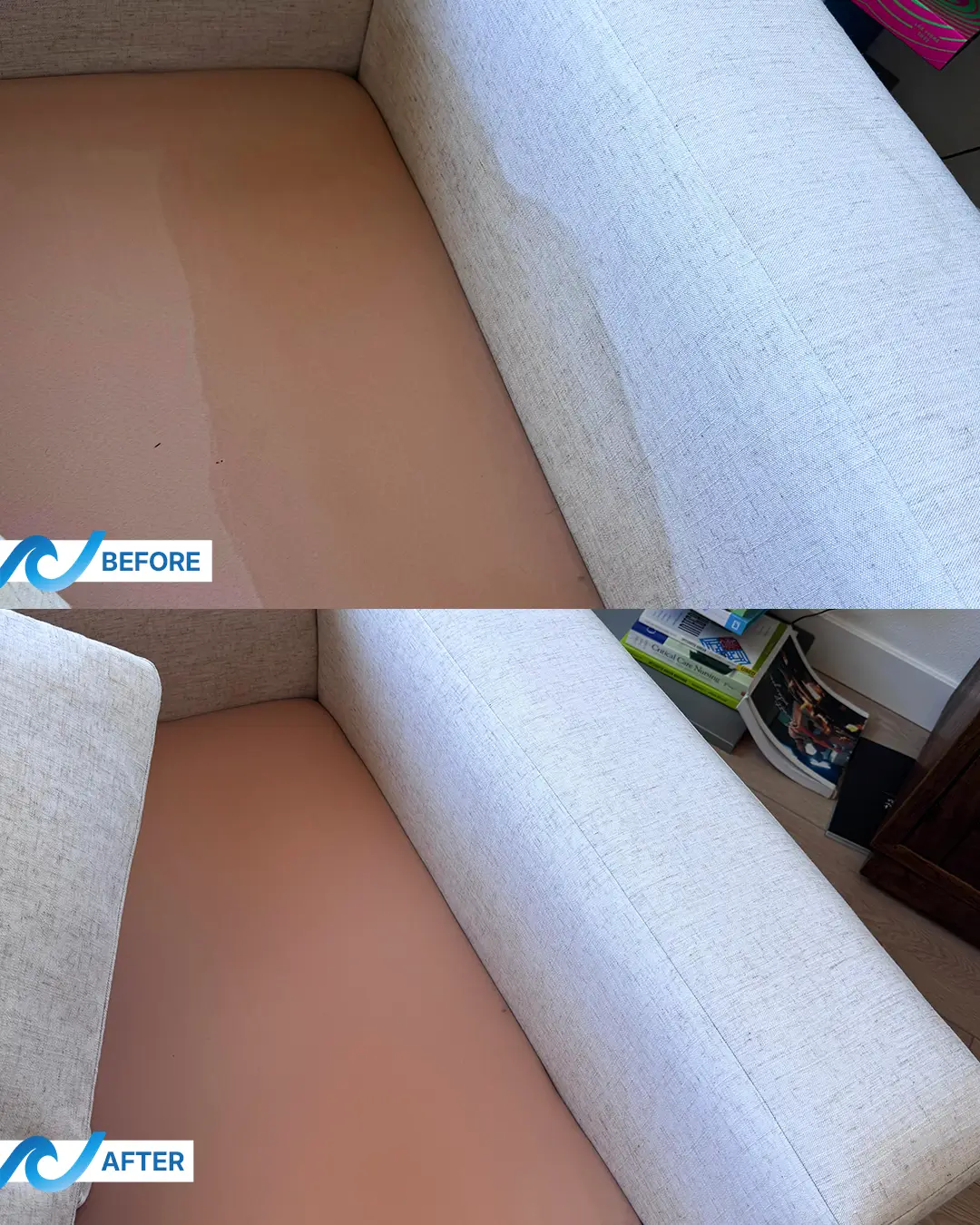
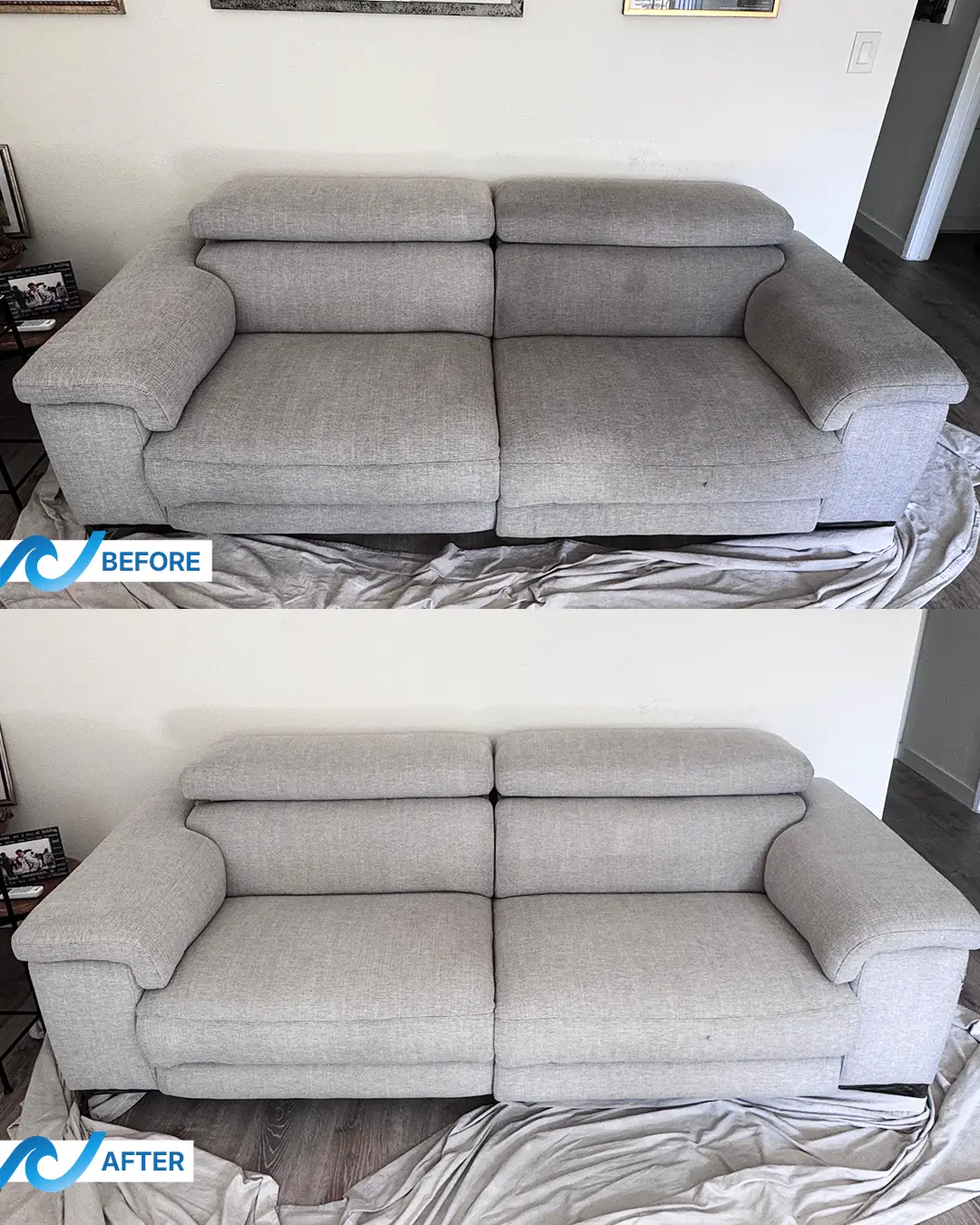 (Before and after professional cleaning: removal of surface stains and even color restoration while preserving the fabric’s original tone.)
Why upholstery can darken after cleaning
Another common concern arises when brownish stains appear after drying. This usually happens with natural fiber fabrics.
During the cleaning process, internal residues, natural oils from the fibers, or dissolved deep soil may migrate to the surface as the fabric dries. If extraction is insufficient, this migration leaves visible marks.
This discoloration is not directly caused by the cleaner itself, but by excessive moisture combined with improper technique. That is why moisture control is essential.
Can steam cleaning cause discoloration?
Steam cleaning, when properly applied, is a safe and effective method. Discoloration is not a natural consequence of steam itself, but it may occur if equipment is misused, heat is excessive, or the fabric becomes oversaturated.
On delicate fabrics, prolonged exposure to high temperatures or retained moisture without proper extraction can alter texture and, in some cases, slightly affect fiber tone. This risk is more common with household steamers that do not offer precise temperature, pressure, or moisture control.
However, when steam cleaning is performed by a qualified professional using appropriate equipment and controlled techniques, the risk of discoloration is significantly reduced. Professionals assess the fabric beforehand, adjust the process accordingly, and extract moisture immediately to prevent damage.
(Professional sofa cleaning result: removal of accumulated dirt and revitalized fabric appearance without discoloration.)
Common mistakes that lead to stains after cleaning
Many post-cleaning stains are the result of small mistakes made during application.
Common errors include:
- Using excessive product believing it increases effectiveness;
- Skipping a spot test in a hidden area;
- Scrubbing too aggressively and damaging fibers;
- Not allowing adequate drying time;
- Using multipurpose cleaners instead of upholstery-specific products;
- Failing to identify the fabric composition before cleaning.
These mistakes create ideal conditions for stains, discoloration, and uneven texture.
How to avoid stains when cleaning upholstery at home
If cleaning is done at home, certain precautions significantly reduce the risk.
First, identify the fabric type. Many upholstered items include cleaning codes indicating whether water-based, solvent-based, or specialized methods should be used.
Apply small amounts of product, avoid oversaturating the fabric, and always remove excess moisture using a clean cloth or appropriate equipment. Always perform a spot test in a discreet area to evaluate fiber reaction.
Proper ventilation is also essential to ensure faster drying and prevent moisture from remaining inside the upholstery for extended periods.
When professional upholstery cleaning is the safest option
If the upholstery is delicate or already has difficult stains, professional cleaning is the safest solution.
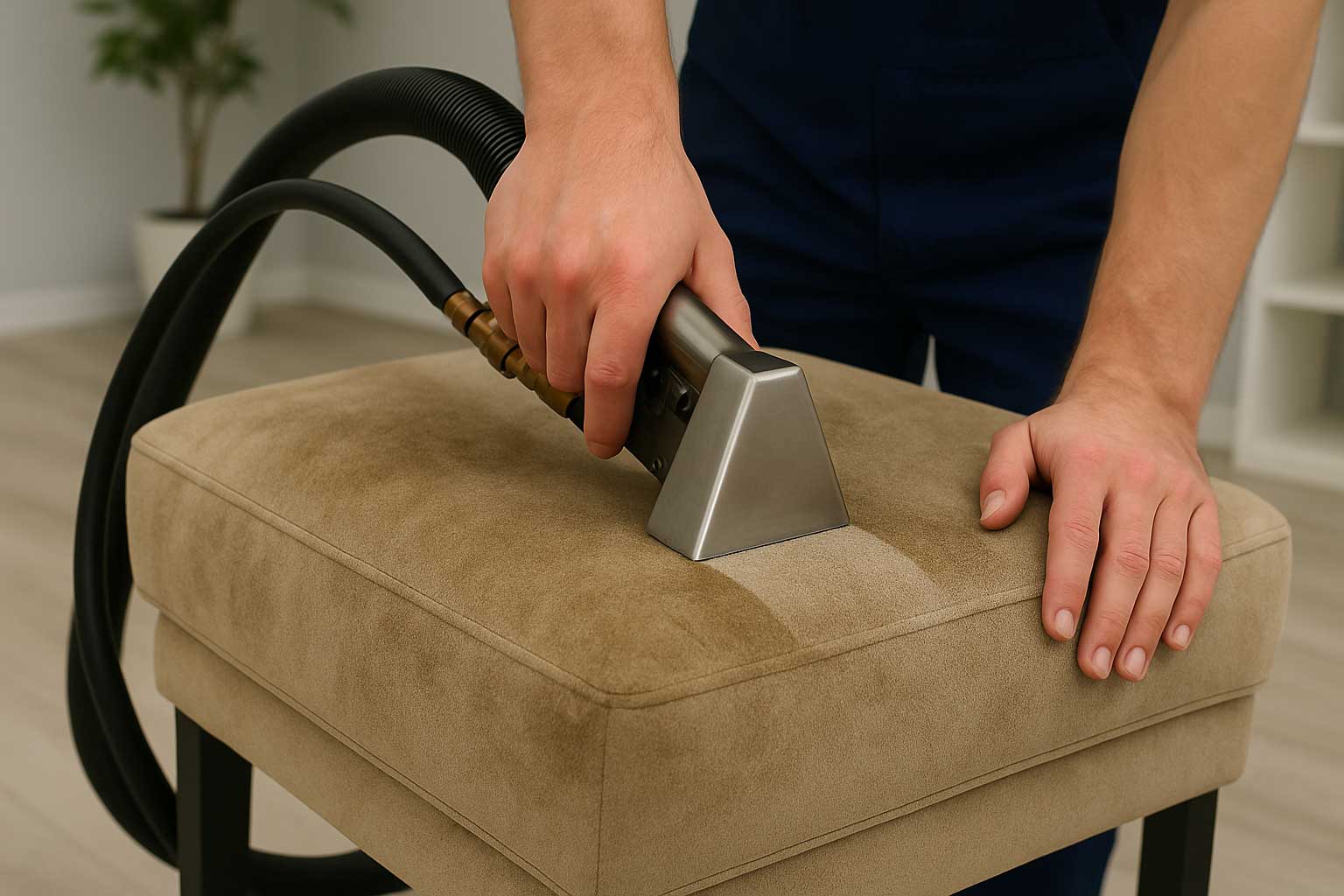
Professional equipment allows strict control of moisture, temperature, and extraction, drastically reducing the risk of stains or residue. Trained technicians evaluate the fabric beforehand and adjust the method accordingly.
This prevents the two main causes of post-cleaning stains: excess product and excess water.
Key benefits of professional cleaning:
- Precise temperature and moisture control;
- Effective extraction to prevent residue buildup;
- Reduced risk of discoloration or marks;
- Technical evaluation of fabric type before cleaning;
- Proper use of fabric-compatible products;
- Increased durability and fiber preservation;
- Deeper removal of soil and microorganisms.
Choosing a specialized service is not just about appearance, it is about protecting your upholstery and extending its lifespan safely.
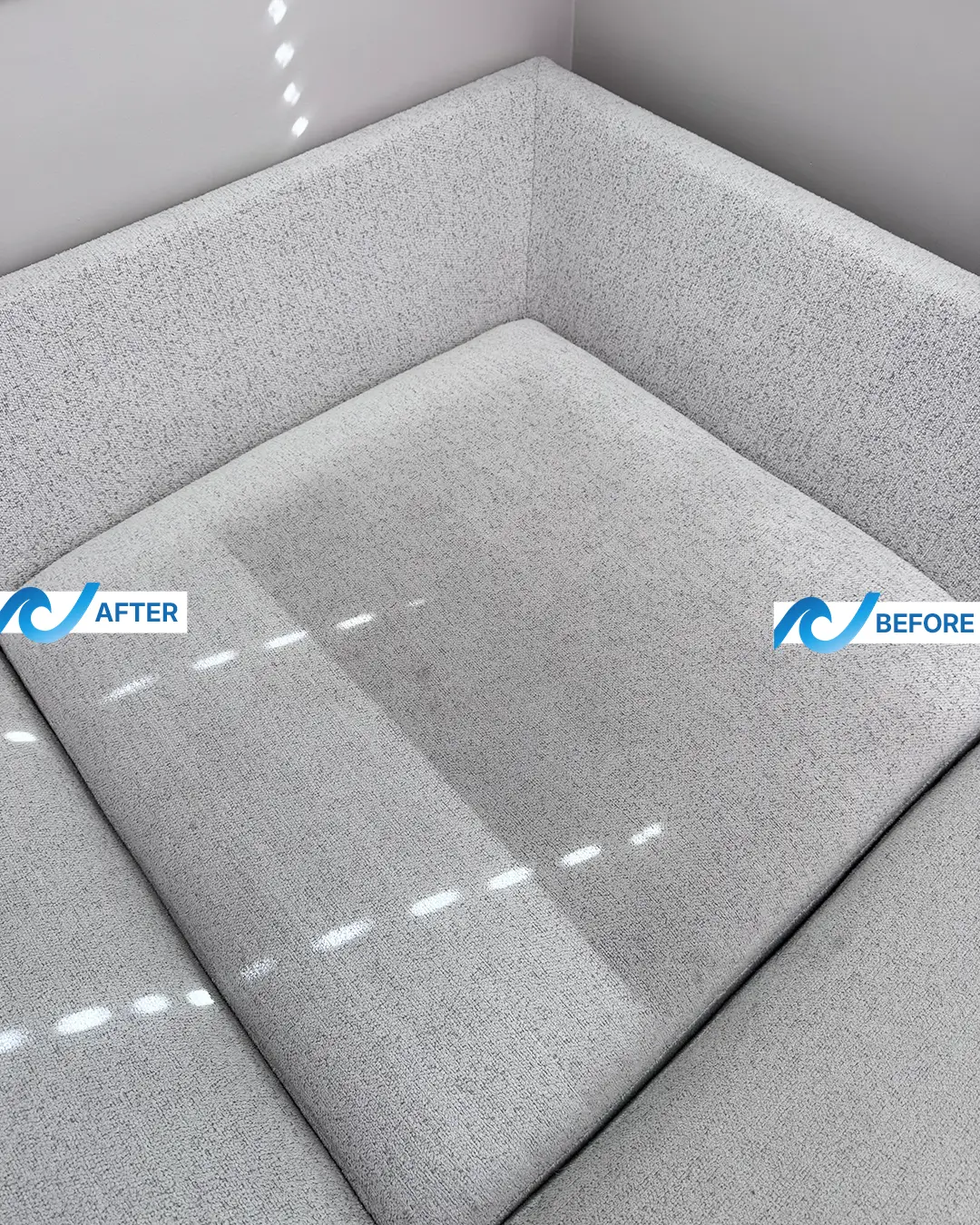
(Technical cleaning on light-colored upholstery: stain removal and deep sanitation with controlled moisture to prevent residual marks.)
How CleanWave prevents stains during upholstery cleaning
CleanWave uses a technical and controlled process that prioritizes fabric safety and preservation. Each piece of upholstery is evaluated before cleaning to identify fabric composition, soil level, and potential risks.
The method includes:
- Precise moisture control;
- Use of professional products compatible with the material;
- Immediate extraction to prevent oversaturation.
This approach reduces the likelihood of soil migration, residue buildup, or color alteration.
In addition, CleanWave uses products that are safe for pets and the entire family, formulated to clean effectively without leaving harsh residues in the fabric. This ensures not only deep cleaning, but also a healthier indoor environment after service.
The result is deeply cleaned, sanitized upholstery with a refreshed appearance , without the risk of stains caused by excess product or improper moisture control.
If you have any concerns about the safety of cleaning your upholstery, the best choice is to avoid guesswork and rely on a professional service.
Book your cleaning today and experience the CleanWave difference!
CleanWave Carpet Care
2714 Ariane Drive, San Diego, CA 92117
(858) 222-9836
Frequently Asked Questions (FAQs)
Is upholstery cleaning good for allergies?
Will upholstery cleaner remove urine stains?
Yes, when treated properly. Professional upholstery cleaning can remove urine stains and neutralize odors, especially when enzymatic or specialized products are used. Effectiveness depends on how long the stain has been present and whether it has penetrated deeply into the padding.
How often should I clean my upholstery?
Professional cleaning is recommended every 12 months. In homes with pets, children, or allergy sufferers, cleaning every 6 to 8 months is ideal to maintain hygiene and preserve the fabric.