



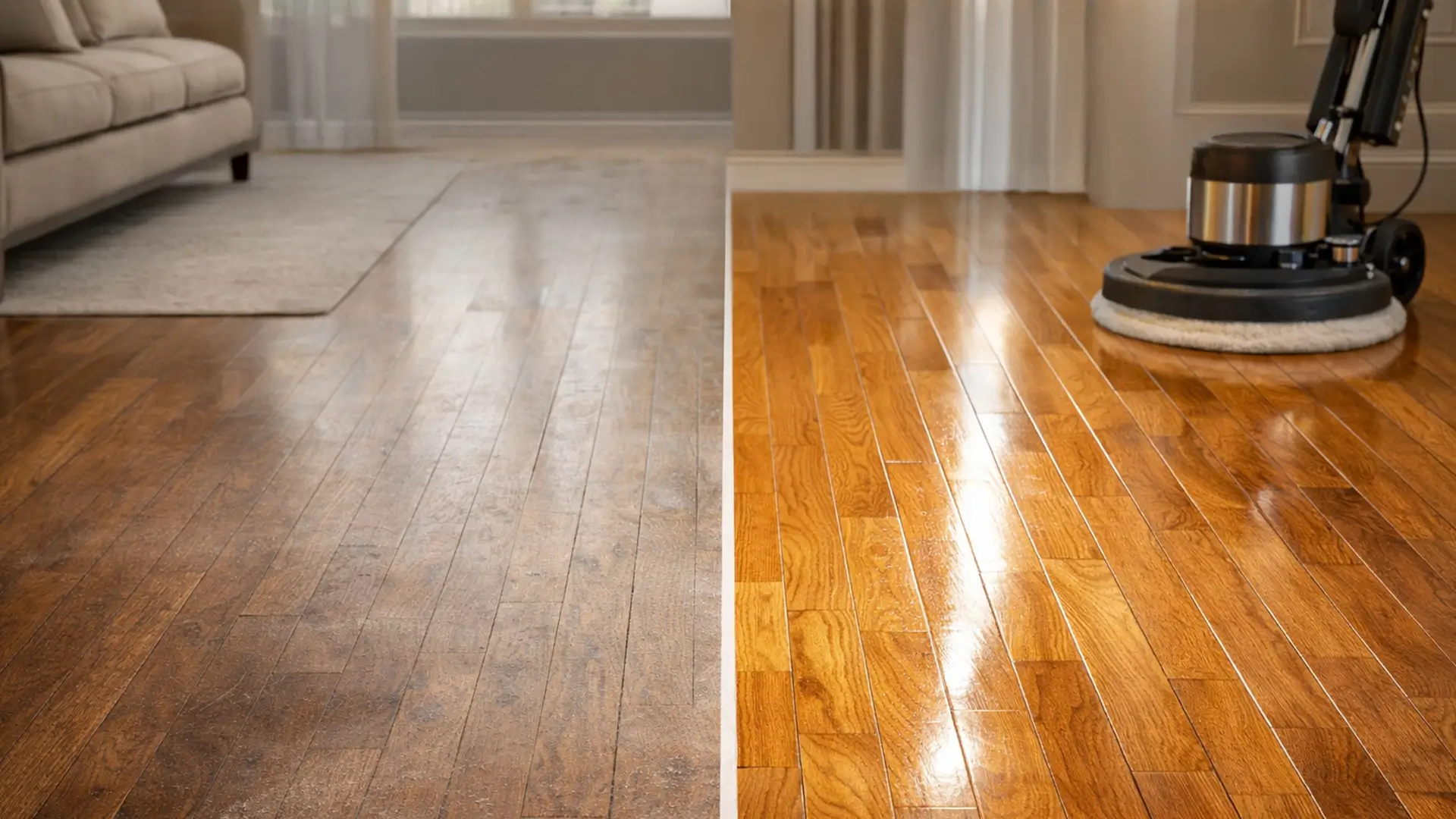
Hardwood floors instantly transform a space. They bring depth, elegance, warmth, and character. But when the floor starts to look dull, cloudy, scratched, or lifeless, something shifts. It affects not only the appearance of the room but the perception of care throughout the entire home.
This is why many homeowners eventually ask themselves: Why is my hardwood floor dull even when I clean it regularly?
The truth is that dullness does not happen overnight. In most cases, it is the result of multiple factors working together, including cleaning mistakes, incorrect products, natural wear, moisture, and invisible residue.
This guide explains all of these causes with clarity and technical accuracy so you can understand what is happening and what actually works to restore your floor’s original appearance.
Why hardwood floors lose their shine: most common causes
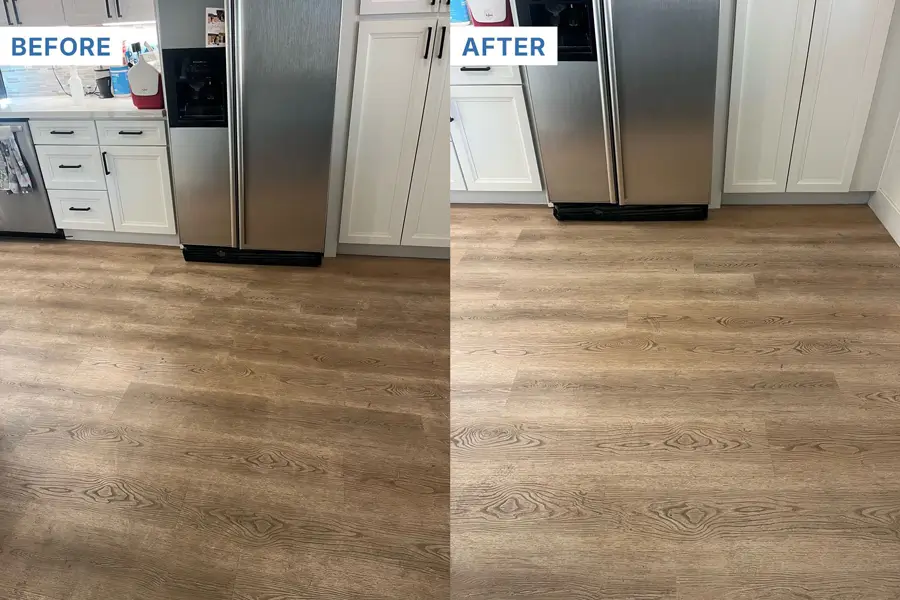 (Before and after Hardwood Floor Cleaning by CleanWave Carpet Care)
If your floor looks dull, cloudy, or constantly dirty, it usually comes from physical and chemical changes in the finish, not in the wood itself. The finish is responsible for shine, protection, and durability, and any alteration in it immediately affects the floor’s appearance. Here are the real causes:
1. Product residue built up on the finish
Over time, layers of waxes, oils, polishes, and improper cleaners build up on the surface. These products create a barrier that distorts light reflection, leaving the floor cloudy, grayish, stained, and aged.
This is not dirt. It is an accumulation of products on the surface that alters the protective layer.
2. Microabrasions and natural finish wear
Shine depends on a smooth and continuous surface. As the finish wears, you begin to see:
- tiny micro-scratches
- light surface scuffs
- areas with partial loss of the topcoat
Even if unnoticeable individually, these abrasions disrupt light reflection and make the floor look lifeless. No household mop can correct this.
3. Moisture, the silent enemy
Wood and its finish react to water. When there is excess moisture from overly wet mops, frequent water cleaning, leaks, or high humidity, the results include:
- swelling of the fibers
- opened pores in the finish
- rough texture
- gradual loss of shine
It is a slow but destructive process.
4. Incorrect chemical cleaning
Acidic, abrasive, or strong alkaline products break down the finish.
This includes:
- vinegar
- alcohol
- ammonia
- strong detergents
- multi-surface cleaners
Once the finish is damaged, shine cannot return without professional treatment.
5. Abrasive particles and fine dust
Sand and fine dust brought in from shoes work like microscopic sandpaper. Over time, they cause:
- dullness
- wear paths
- uneven shine
This is especially common in high-traffic areas.
Cleaning mistakes that make dullness worse
Once residue, wear, or microabrasion is present, certain habits accelerate the damage and make restoration more difficult. These mistakes create cumulative harm and, in many cases, make it impossible to restore shine without professional service.
1. Using shine, polish, or “revitalizer” products
These products do not restore shine. They mask the problem.They form an artificial film that undergoes chemical changes over time. The result is a surface that:
- stains easily
- traps dirt
- becomes slippery or sticky
- yellows with age
- looks uneven and dull
This extra layer blocks any cleaning from working. Professional removal is often required.
2. Applying wax over modern polyurethane finishes
Polyurethane-sealed floors, the standard in most homes, are not designed to accept wax. When wax is applied:
- it creates a barrier incompatible with the topcoat
- prevents proper adhesion of future finishes
- causes uneven spots
- makes cleaning harder
Removing wax from polyurethane requires specific products and skilled labor. It is more labor-intensive and costly than most people expect.
3. Using a mop that is too wet
Excess water is one of the most damaging mistakes for hardwood floors. When water sits on the surface or seeps in, it penetrates:
- between the boards
- natural wood pores
- small cracks in the finish
This leads to:
- board swelling
- dark stains
- complete loss of shine in specific areas
- rough or uneven texture
It is a silent, progressive, and often irreversible type of damage.
4. Using vinegar as a “natural cleaner”
Vinegar is often recommended online, but it is extremely harmful to modern finishes. Because it is acidic, it causes:
- gradual corrosion
- cloudy spots
- permanent dullness
- a dry, lifeless appearance
Over time, the floor enters a cycle of deterioration that cannot be reversed with cleaning alone.
5. Using spray mops with products not formulated for hardwood
Many supermarket cleaners labeled “multi-surface” contain ingredients that harm hardwood finishes, such as:
- aggressive detergents that dry out the topcoat
- oily fragrances that leave residue
- surfactants that create a hazy film
- agents that react negatively with polyurethane
The result is a floor that becomes dull, uneven, sticky in some areas, and very difficult to restore.
Repeated use leads to residue layers that block the natural shine entirely.
How to tell if the problem is dirt or true finish wear
Before choosing a solution, identify what is actually happening.
1. Shine returns for a few minutes after cleaning: residue
The cloth temporarily removes surface oils, but the film reappears once dry.
2. Shine does not return at all: finish wear
No household product can fix this. Professional service is required.
3. Floor feels sticky or smudges when mopping: chemical buildup
4. Floor feels rough: moisture or microabrasion
Correct diagnosis is essential for proper treatment.
What really works to restore shine without damaging the floor
The solution depends on the cause.
1. When the problem is residue: professional deep cleaning
The goal is to remove the accumulated layer without harming the finish.
Professional cleaning involves:
- encapsulating agents
- agitation
- immediate extraction
- pH neutralization
- removal of residue layers
This cannot be replicated with household mops.
2. When the problem is wear: recoat or renewal
If the finish has been eroded, only a professional process restores shine. This includes:
- light abrasion of damaged areas
- application of a new topcoat
- proper curing
- long-lasting protection
DIY attempts usually make the damage worse.
3. When moisture is involved: drying and environmental stabilization
Often, fixing the source is enough:
- avoid wet mops
- control indoor humidity
- use entry rugs
- keep plants and pots away from the wood
How CleanWave restores the natural shine of your hardwood floor
Restoring shine requires precision. It is not just about cleaning but about removing residue without harming the finish and bringing back the clarity the floor has lost over time.
CleanWave uses a highly technical, safe, and eco-friendly method:
- Agitation: Gently scrubbing with an electrical machine to remove dirty.
- Immediate extraction: Removes dissolved dirt before it settles again.
- Low moisture: Prevents swelling, stains, and moisture infiltration.
- Professional neutral products: Do not leave residue, do not yellow, and do not damage the finish.
- Complete residue removal: Eliminates buildup that leaves the floor cloudy or sticky.
- Fast drying: The floor is ready for use almost immediately.
The result: A more uniform, cleaner floor, free of residue, and with its natural shine restored, without any aggression to the wood or its finish.
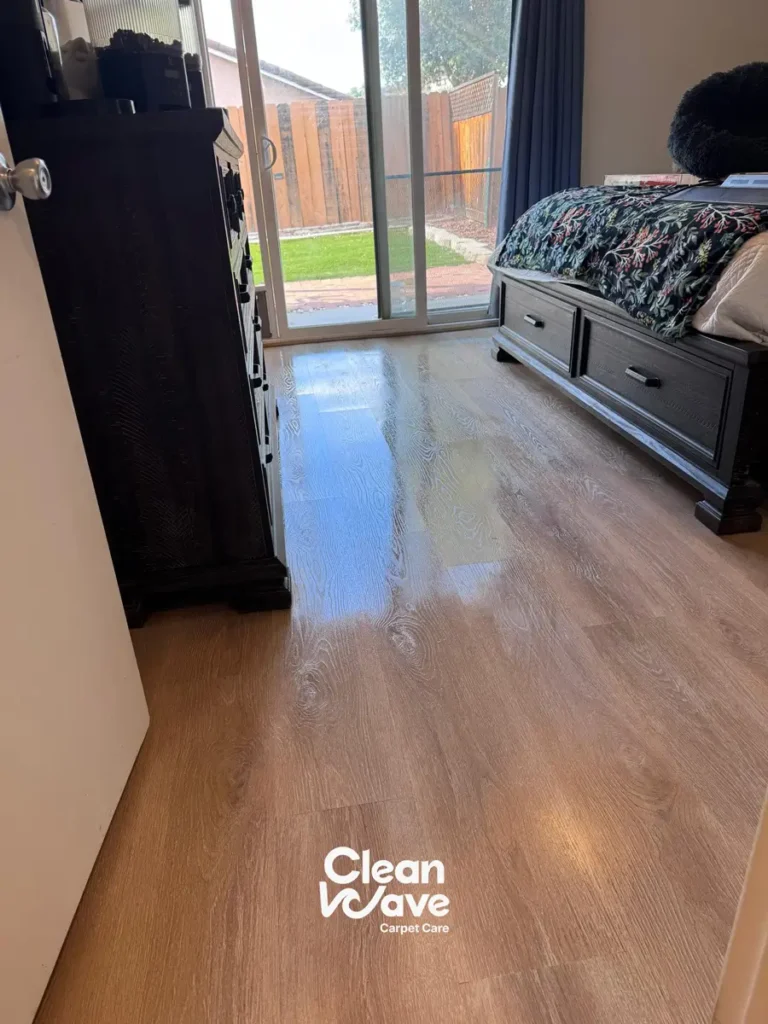
(After Hardwood Floor Cleaning by CleanWave Carpet Care)
Want your hardwood floors to shine again?
CleanWave restores the original beauty of your hardwood floors with safety and precision.
Book your hardwood floor cleaning today and experience the CleanWave difference!
CleanWave Carpet Care
2714 Ariane Drive, San Diego, CA 92117