How to Permanently Remove Pet Odor from Carpet
Pet odor in carpet is one of the most frustrating problems for homeowners because it rarely stays “only on the surface.” You clean the spot, the smell seems to disappear for a day or two, and then it comes back, sometimes even stronger than before.
This usually happens because pet urine, hair, oils, and organic residue can penetrate deep into the carpet fibers, padding, and, in more severe cases, even the subfloor. Regular cleaning may improve the surface, but it often cannot remove the source of the odor.
In this guide, you will understand why pet odor comes back after cleaning, how urine behaves inside carpet fibers, when DIY methods can help, when the problem has reached the padding or subfloor, and how professional pet odor removal works in San Diego homes.
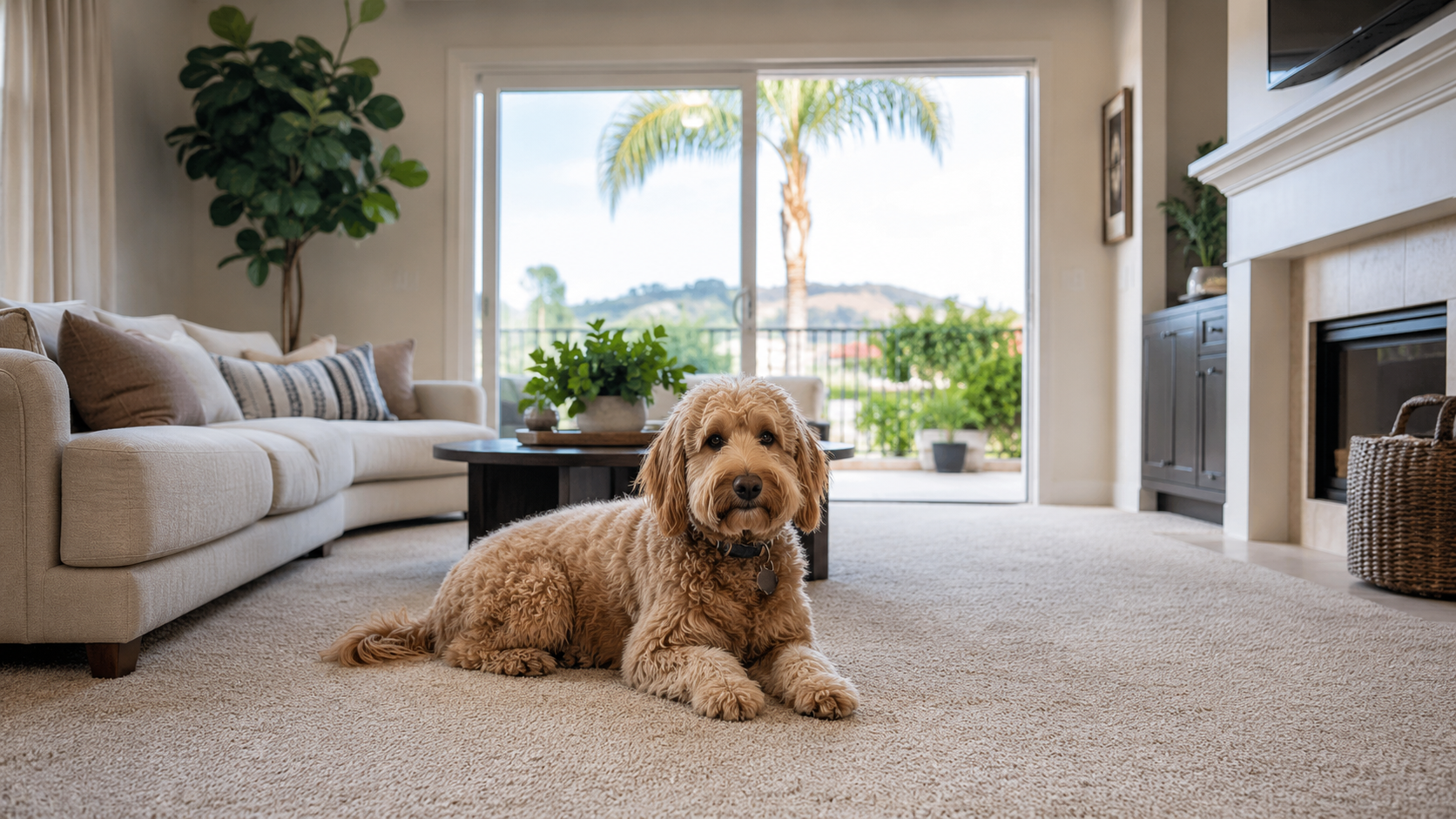
Pet odor can stay trapped in carpet fibers even when the room looks clean.
Why Pet Odor Comes Back After You Clean It
If you cleaned the carpet and the smell came back, the problem is not necessarily that you cleaned it wrong. The real issue is that pet odor often comes from deeper layers than most household products can reach.
Pet urine is especially difficult because it does not behave like a simple liquid spill. When fresh, it spreads through the carpet fibers and can reach the backing or padding. As it dries, it leaves behind odor-causing compounds that can be reactivated by humidity, heat, or water used in future cleanings.
That is why the smell may come back after:
- humid weather;
- steam from the shower or open windows;
- DIY carpet cleaning;
- new pet accidents in the same spot;
- higher indoor temperatures;
- incomplete drying.
The odor is not always on the top layer of the carpet. It may be trapped underneath, where sprays, perfumes, and basic cleaners cannot fully reach.
To remove pet odor permanently, the goal is not to cover the smell. The goal is to remove or neutralize the source.
The Science Behind Urine Odor in Carpet Fibers
Pet urine is made up of water, urea, uric acid, salts, hormones, bacteria, and other organic compounds. When it is fresh, it can be easier to dilute and extract. But once it dries, it becomes harder to remove because part of the residue can crystallize and bond to the carpet fibers.
The main reason urine odor keeps coming back is that dried residue can be reactivated when it comes into contact with moisture. That is why the carpet may seem odor-free for weeks and then suddenly smell again after a humid day or after someone tries to clean it with too much water.
Inside the carpet, the process usually happens like this:
- urine enters the carpet fibers;
- the liquid spreads into the backing or padding;
- organic residue begins to break down;
- bacteria contribute to the odor;
- dried residue remains trapped;
- moisture reactivates the smell later.
This is especially common in homes with repeated accidents in the same area. Dogs and cats may also return to previously marked spots because they can detect odor traces that humans may not even notice.
For true urine odor carpet removal, the cleaning method needs to treat both the visible stain and the odor source below the surface.
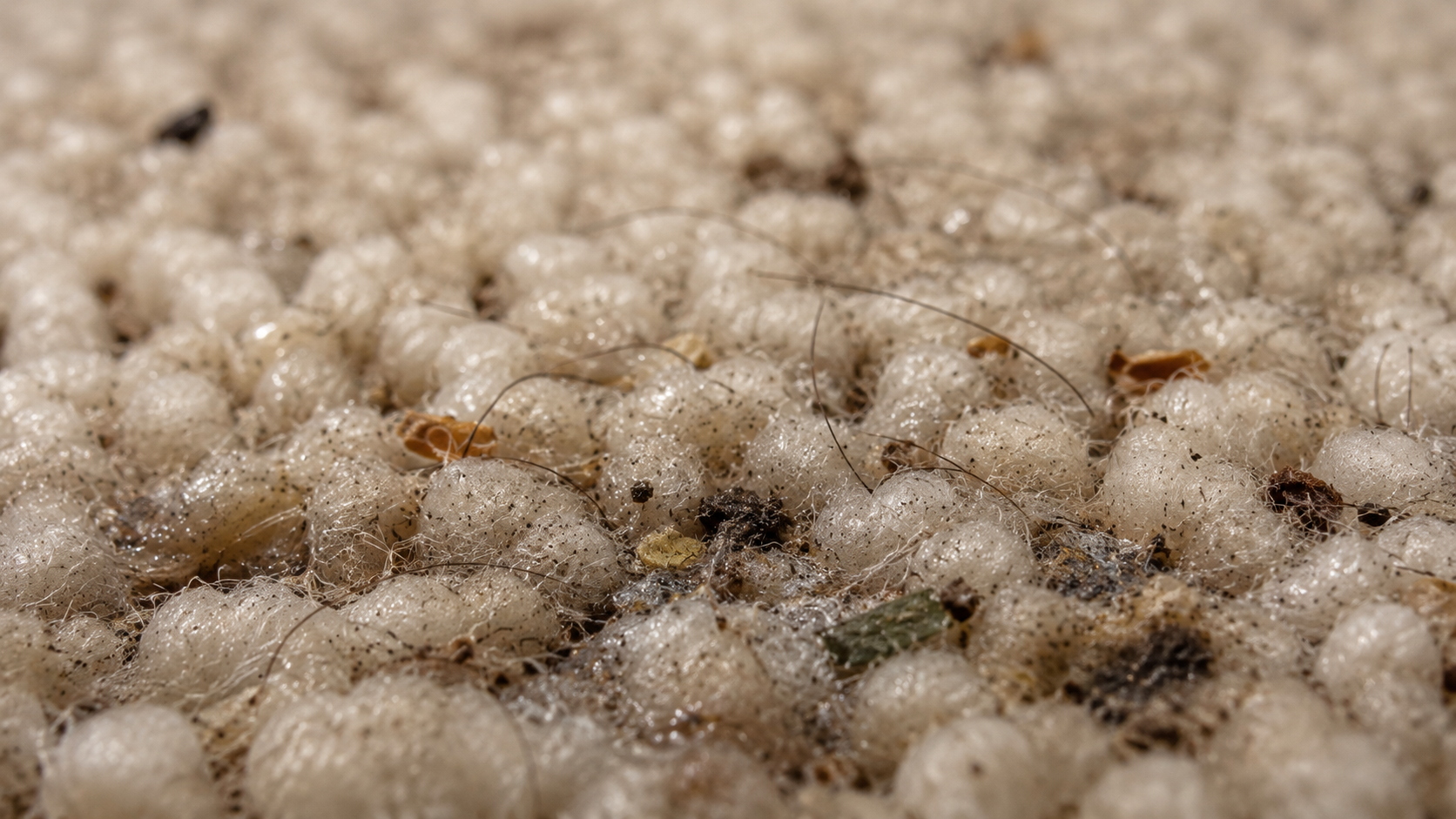
Pet odor often comes from residue trapped below the surface of the carpet fibers.
Odor-Masking Products vs Professional Steam Cleaning
Many household products only perfume the carpet for a short time, but they do not remove the source of the odor. When the fragrance fades, the pet smell can come back.
Professional steam cleaning works more deeply, using heat, water, and extraction to help remove dirt, hair, oils, and residue trapped in the fibers.
It can help mainly in cases of:
- recurring carpet odor;
- accumulated pet residue;
- high-traffic areas;
- carpets that look clean but still smell.
If urine has already reached the padding or subfloor, additional evaluation may be needed. The result depends on the depth of the contamination.
DIY Methods That Help and Their Real Limits
Some DIY methods can help reduce pet odor, especially when the accident is recent and has not yet reached the carpet padding. But DIY needs to be done carefully. The wrong method can spread urine into deeper layers, set stains, or make odor removal even harder later.
For a recent accident, the best first steps are:
- blot the area immediately with clean towels;
- avoid rubbing aggressively;
- use a pet-safe enzyme cleaner;
- follow the product’s recommended dwell time;
- avoid soaking the carpet;
- improve airflow during drying.
What you should avoid:
- using too much water;
- applying strong perfumes;
- mixing chemical products;
- using bleach on carpet;
- scrubbing aggressively;
- using heat before treating the odor source.
Heat can make the odor more noticeable because it can activate residue trapped in the fibers. Excess water can also push urine into the carpet backing or padding.
DIY can help when the problem is recent and limited. But if the smell has lasted for days, keeps coming back, or covers a larger area, the problem is probably deeper than surface cleaning.
When the Odor Has Gone from the Carpet to the Subfloor
This is the point many homeowners do not want to hear, but it matters: sometimes, the carpet is not the only problem.
If urine has passed through the carpet and padding, it can reach the subfloor. When this happens, surface cleaning will not permanently remove the odor because the source is no longer only in the carpet fibers.
Signs that the odor may have reached deeper layers include:
- the smell returns quickly after cleaning;
- the odor is stronger in one specific spot;
- pets keep returning to the same area;
- the carpet feels damp or stained underneath;
- the smell gets stronger on humid days;
- several accidents happened in the same spot.
When contamination reaches the padding, professional treatment may involve deep extraction, odor treatment, and, in severe cases, padding replacement. If the subfloor is affected, sealing or specialized remediation may be needed before the odor is fully controlled.
That is why professional pet odor removal for carpet is often necessary for old or repeated urine problems. A professional can assess how far the contamination has gone and choose the right treatment instead of guessing.
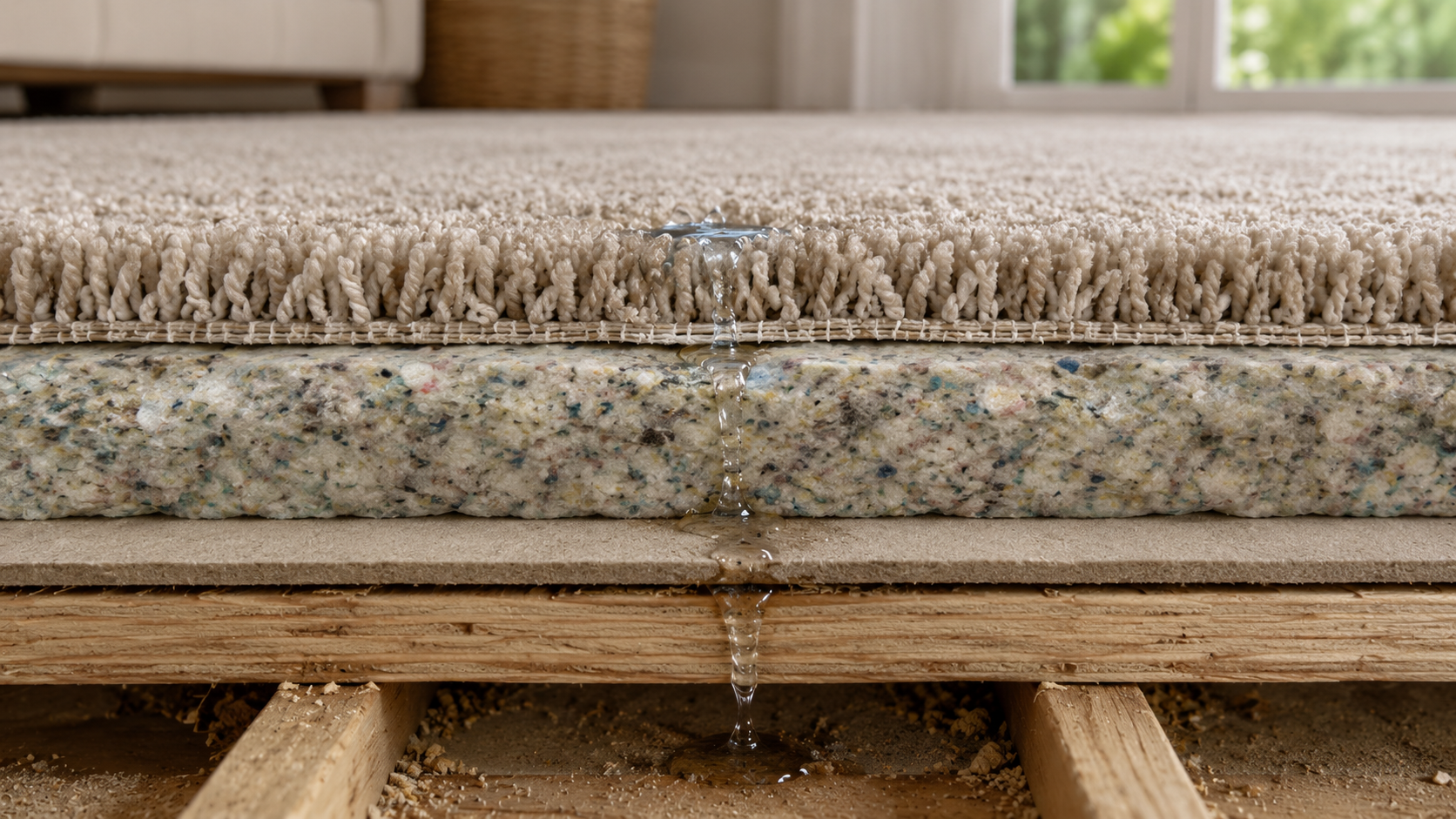
When pet urine reaches the padding or subfloor, odor removal may require deeper evaluation.
Dog Urine vs Cat Urine: Why They Need Different Treatments
Dog urine and cat urine can both cause strong odors, but they do not always behave the same way in carpet.
Dog urine accidents usually involve a larger volume, especially with medium or large dogs. This means the liquid can spread over a wider area and reach the padding quickly. In homes with puppies, senior dogs, or repeated indoor accidents, odor can build up over time, even if each accident seems small on its own.
Cat urine is usually more concentrated and can have a stronger smell. It can also be harder to locate because cats may urinate in hidden corners, near walls, inside closets, or behind furniture. Cat urine odor can become extremely persistent when it dries and reacts with humidity.
That is why dog urine carpet removal and cat urine carpet permanent removal may require different approaches.
In general:
- dog urine often requires extraction over a wider area;
- cat urine often requires stronger treatment at the odor source;
- repeated accidents require deeper inspection;
- old stains may require professional tools to locate the contamination;
- padding or subfloor problems may require more than cleaning.
The mistake is treating every pet odor the same way. The most effective approach is to identify the pet, the accident pattern, the age of the stain, and the depth of the odor.
How CleanWave Removes Pet Odor from Carpets in San Diego Homes
CleanWave Carpet Care understands how frustrating pet odor can be, especially when you have already tried cleaning the carpet and the smell keeps coming back. In San Diego homes, humidity, coastal air, pets, and daily foot traffic can make odor problems even more persistent.
Our carpet cleaning in San Diego goes beyond surface appearance. We use professional steam cleaning and odor-focused treatment to help remove embedded dirt, pet residue, allergens, and odor-causing buildup from carpet fibers.
For pet odor problems, CleanWave evaluates the affected areas, considers the type of accident, and uses a careful cleaning approach designed to reach the source of the smell whenever possible. The goal is not to cover the odor with fragrance. The goal is to help remove the residue causing the problem.
Whether it is dog urine, cat urine, recurring pet smell, or carpet odor that gets worse on humid days, professional cleaning can help restore a fresher, cleaner, and more comfortable indoor environment.
If your carpet still smells bad after several cleaning attempts, it is time to stop guessing. Contact CleanWave Carpet Care and schedule professional pet odor removal and carpet cleaning in San Diego.
CleanWave Carpet Care
2714 Ariane Drive, San Diego, CA 92117
(858) 222-9836
Professional carpet cleaning can remove pet odor completely when the odor source is mainly in the carpet fibers and backing. Steam cleaning helps remove embedded dirt, pet residue, oils, allergens, and odor-causing buildup. However, if urine has reached the padding or subfloor, additional evaluation may be needed.
We recommend acting immediately, but carefully. Blot the area with clean towels to absorb as much liquid as possible, and avoid rubbing, scrubbing, or soaking the carpet. Fast action can help reduce deeper penetration into the carpet fibers, backing, and padding. After that, scheduling professional carpet cleaning is the safest next step if the odor remains or the accident happened in the same area more than once.
Pets may return to the same spot because odor traces remain in the carpet fibers, backing, padding, or nearby surfaces. Even when humans no longer smell it clearly, dogs and cats may still detect the area. That is why removing the source of the odor is more important than simply making the room smell better.
Need Professional Help?
CleanWave provides expert cleaning services across San Diego County. Let us take care of your home today.
Get a Fast Quote