How to Clean a Wool Rug: The Hot Water Myth and What Really Ruins It
Quick answer: The safest way to clean a wool rug is to have a trained professional do it. The wool industry's own guidance (IWTO and WoolSafe) says periodic deep cleaning should be done by a professional with wool experience, because shrinkage and dye bleed cannot be undone. Between professional cleanings you can vacuum gently. If something spills, blot it with a clean white cloth, use as little water as possible, do not rub and let the area dry, but do not try to treat the stain yourself. Hot water gets most of the blame, yet agitation, over-wetting and harsh cleaners cause more damage. If the rug is valuable, stained or heavily soiled, stop there and have a professional look at it.
This guide covers wool rugs only. For other rug fibers, see the broader guide to cleaning an area rug without damaging it. It draws on the Woolmark Company, the International Wool Textile Organisation (IWTO), the WoolSafe Organisation and Cleanfax, together with observations from Cesar Scalea, owner of Clean Wave Carpet Care, an upholstery, carpet and rug cleaning company in San Diego. It is general information, and the care label on your rug always comes first. It explains what is safe to do at home between visits, where home care should stop and how to avoid making a problem worse before a professional can deal with it.
Why wool shrinks, and why the hot water warning is half right
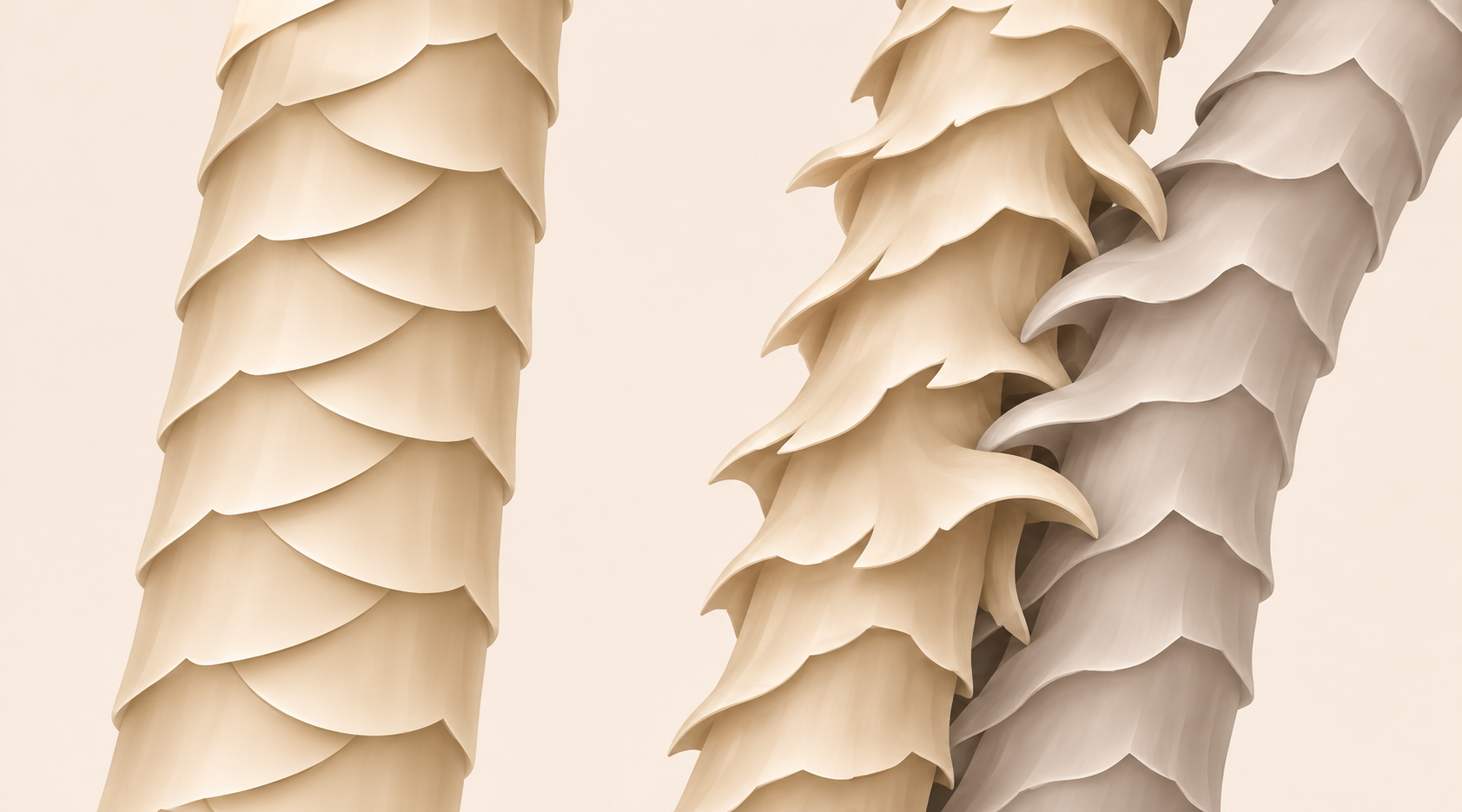
Almost every wool rug guide says the same thing: never use hot water. The Woolmark Company explains the mechanism behind the warning. Untreated wool fibres are covered in microscopic scales, and when they are exposed to heat and moisture the scales lift, then with mechanical agitation they lock onto the scales of other fibres. The process is irreversible and leads to felting and shrinkage.
Notice that heat is only one ingredient. IWTO's wool care notes say that temperature alone will not shrink wool, but agitation will cause it to shrink and felt. And the IWTO and WoolSafe wool carpet guide says professional restorative cleaning typically includes hot water extraction. So hot water is not automatically the culprit. Hot water plus scrubbing plus soaking is. That combination is hard to judge by eye, which is why wool rug cleaning is closer to a skilled trade than a household chore.
“People worry about water temperature because it is the one thing they can feel with their hand. What wrecks a wool rug is the combination: a lot of water, a lot of scrubbing and a cleaner that is too strong, followed by a rug that stays wet too long.”
Cesar Scalea, Owner, Clean Wave Carpet Care
The Wool Rug Fault Lines
The table below sorts the ways a wool rug gets damaged into four fault lines. It is an original framework prepared by Clean Wave Carpet Care from Woolmark, IWTO, WoolSafe and Cleanfax guidance, and from professional experience. It is a way to think about risk, not a measured dataset.
Fault line | What goes wrong | What the sources say | What you can control at home |
1. Agitation | Scrubbing, brushing hard or wringing locks the fibre scales together and the pile mats or shrinks | Woolmark: heat and moisture lift the scales, agitation locks them. IWTO: agitation causes the shrinking and felting | Do not scrub or brush hard; blot only |
2. Wetness | Over-wetting lengthens drying, discolours the pile and can stain or distort the backing | WoolSafe: over-wetting greatly lengthens drying time. IWTO and WoolSafe: excess alkalinity can stain jute backing | Use as little water as possible, blot, dry flat with airflow |
3. Chemistry | High-alkaline or household cleaners cause colour bleeding, sticky residue and fast re-soiling | WoolSafe: only WoolSafe approved products, never dish washing liquids or household cleaners. IWTO and WoolSafe: high alkalinity can bleed dyed yarns | Do not add household products; leave the choice of product to a professional |
4. Colour | Dye that is not fast runs onto the pile, and the damage cannot be reversed | WoolSafe: test for colour fastness first; some rugs carry dyes with limited fastness. Cleanfax: colour loss is more likely above pH 5.9 | Leave dye testing to a professional before any wet cleaning |
Source: Clean Wave Carpet Care framework, based on Woolmark, IWTO, WoolSafe and Cleanfax. The "what you can control" column is Clean Wave's professional view.
Notice that water temperature is not on the list by itself. It matters through the first fault line, because heat makes agitation more damaging, which is why cool water is the safer default at home.
Two of these fault lines, shrinkage and dye bleed, cannot be reversed once they happen. That is what makes cleaning a wool rug yourself riskier than cleaning most other surfaces: a mistake is permanent, and you often only see it after the rug is already wet. The last column shows what you can control at home. What a trained cleaner adds is control of all four fault lines at once, which is covered near the end of this guide.
Basic upkeep between professional cleanings
These steps are light upkeep. They protect the rug between professional cleanings, and they help a professional by keeping damage and surprises to a minimum. They are not a replacement for a deep clean.
Check the label and what the rug is made of
Check the care label first. WoolSafe says a blended rug should be treated according to its most sensitive fibre, so a wool and viscose rug needs the gentlest approach of the two. Silk and viscose are separate topics and are outside this guide.
Vacuum gently
The IWTO and WoolSafe guide notes that stiff roller brushes and powerful suction can fuzz and shred wool fibres, and recommends a soft, non-abrasive brush with adjustable height. For a rug, turn the beater bar off or use suction only.
Why the colour has to be tested first
WoolSafe says rugs should be tested for colour fastness in an inconspicuous area before cleaning, and warns that some rugs carry dyes with limited fastness. A professional runs this test before choosing a method, and it is not worth improvising with household water and cloths, because a dye that runs cannot be taken back. A good cleaner changes the plan if the dye is not stable.
The pH of wool also matters for dye. Cleanfax, quoting the WoolSafe WS1000 standard, says finished wool is often in the pH range of 4 to 5.5 and that colour loss becomes more likely above pH 5.9. It also notes that some wool lacks an acidic finish and can bleed even with plain water, which is one more reason the dyes should be tested before any wet cleaning.
What to do when something spills on a wool rug
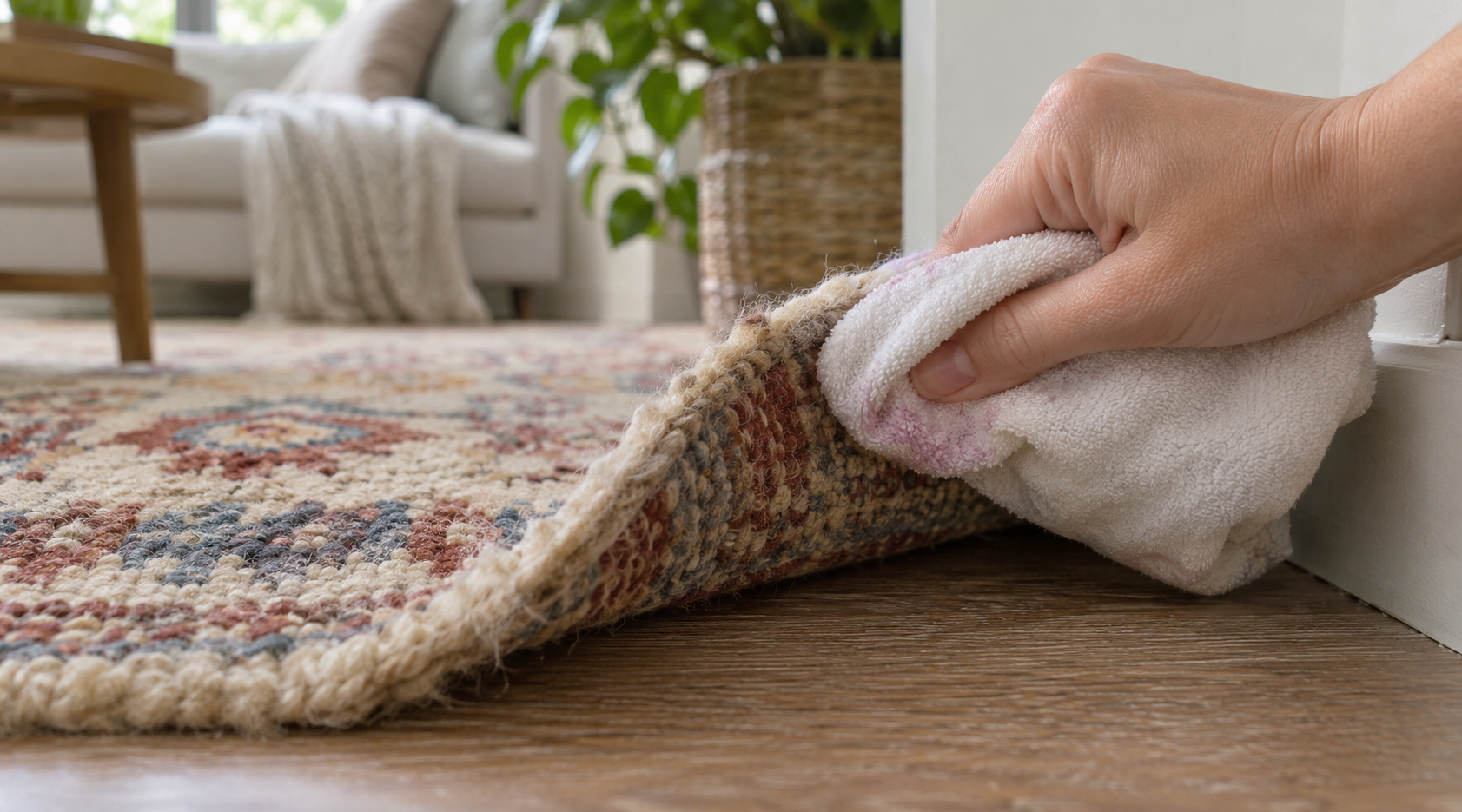
The aim with a fresh spill is to stop it from getting worse, not to clean the rug.
WoolSafe's home method is longer than this, but the safest course for most people is to limit the damage and stop there. In the first minutes:
- Scoop up solids and blot liquids with a clean white cloth. Do not rub.
- Press a clean white cloth or paper towels onto the spot to absorb as much as possible, replacing them as they soak through. Do not pour water on the rug.
- Do not add soap, vinegar or other products, since the wrong one can set the stain or bleed the dye.
- Let the area dry as quickly as possible, flat with air moving over it, and keep pets and foot traffic off it.
WoolSafe adds that the sooner a spill is treated, the better the chance of removing it. If the stain is old, large or from a dyed liquid, stopping early is a better call than escalating. A stain that has already been through several home attempts is harder for anyone to treat, so if you are unsure after the first blot, stop and have a professional take over. Even after a successful first aid, it is worth asking a professional to check the area, since residue and moisture left in the pile are easy to miss.
Why home methods so often go wrong
This table compares the usual options and shows where each one stops. Notice the dish soap row: the wool industry's advice differs from many online guides.
Home method | What the sources say | Where it stops |
Gentle vacuuming | IWTO and WoolSafe recommend a soft, non-abrasive brush; stiff brushes and strong suction can fuzz and shred wool | Removes dry soil only. Does not lift oils or stains |
Blotting with cool water | WoolSafe starts with blotting, then cold water on a white cloth, then warm | Fine for fresh spills. Does not replace a deep clean |
Dry compound or encapsulation | WoolSafe's first DIY choice for water-sensitive fibres; low risk of over-wetting | Light soil only. Heavy soiling needs a wet clean |
Dish soap | WoolSafe says never to use dish washing liquids on wool rugs | Many online guides recommend it, so advice conflicts. The wool body advises against it |
Rental extractor | IWTO and WoolSafe: damage usually comes from over-wetting, agitation and unsuitable products; restorative cleaning is for experienced professionals | Easy to over-wet; detergents may be too alkaline for wool |
Steam cleaner | Woolmark: heat plus moisture plus agitation shrinks wool. IWTO and WoolSafe note professionals use hot water extraction | Result depends on skill, wetness control and drying, which a home user cannot easily control |
Machine washing | Woolmark and IWTO: untreated wool felts when agitated in water; only specially treated wool survives machine washing | Not for ordinary wool rugs unless the care label says so |
Source: Clean Wave Carpet Care summary of Woolmark, IWTO, WoolSafe and the IWTO and WoolSafe wool carpet guide. The "where it stops" column is Clean Wave's professional view.
The pattern in the table is consistent. Every method either removes only surface soil, or depends on judging moisture, agitation and chemistry correctly, and those judgements are hard to make without training. Professionals are not doing anything magic. They follow the same careful steps, with testing, controlled moisture and proper drying.
Drying is where the second half of the damage happens
WoolSafe notes that over-wetting greatly lengthens drying time and can cause discolouration. A wet wool rug is also at risk on the back: the IWTO and WoolSafe guide says excess alkalinity can stain jute backing. Keep the rug flat with air moving over it, and do not put furniture back until it is completely dry. In a coastal climate like San Diego's, damp air can slow drying further, a point covered in this guide to how San Diego humidity affects carpets. Most of the sources reviewed are written for wool carpet, so the same rules apply to wall to wall wool. For carpet that stays installed, see carpet cleaning in San Diego. Drying is also one of the places a professional matters most, because removing moisture and controlling the drying are part of the job from the start, not an afterthought.
“The question I ask about any wool rug is whether the colours will hold. A cream rug with red or dark blue in it is where testing the dye first pays for itself, because a dye that runs cannot be taken back.”
Cesar Scalea, Owner, Clean Wave Carpet Care
When to call a professional, and why sooner is better
Call a professional when any of the following applies:
- The rug is valuable, an heirloom or made with dyes you cannot vouch for. WoolSafe says it is best to have a valuable carpet cleaned by a professional carpet and upholstery cleaning company.
- You are not sure the dyes will hold.
- The rug is heavily soiled and needs a full wet clean. WoolSafe advises a professional for this.
- There is a mildew smell, or the backing feels damp or distorted.
- The label says dry clean only, or the rug is a blend you cannot identify.
- The rug looks dull, or it has not had a deep clean in a long time.
- You simply want to be sure the rug will not be damaged.
The last two matter more than they seem. The IWTO and WoolSafe guide says periodic restorative cleaning is needed to keep wool looking good and retaining its value, and that it should be done by a professional with wool experience. It gives no fixed schedule, because the right interval depends on foot traffic, colour and how well routine care is working. In practice that means a maintenance clean is not an emergency service. It is the way to keep dirt from building up deep in the pile, where home methods cannot reach it, and a good company will tell you whether your rug needs one yet.
A rug can look fine while holding more soil than it seems, which is covered in why your rug
is hiding more dirt than you think.
How a professional cleaner protects a wool rug
The IWTO and WoolSafe guide says restorative cleaning should be done by a professional with experience in wool, and WoolSafe maintains an approved service provider scheme with training requirements. A good company tests the dyes, chooses a method for the construction of the rug and controls the moisture and the drying. In terms of the four fault lines, that looks like this:
- Agitation: the method is chosen for how the rug is made, with controlled action instead of hard scrubbing.
- Wetness: moisture is kept under control and the rug is dried properly, so the pile and backing are not left damp.
- Chemistry: products suited to wool are used, not household cleaners or strong rental detergents.
- Colour: the dyes are tested first, and the plan changes if they run.
“I would rather tell a customer that a rug should not be wet cleaned than clean it and hope. Testing the dyes and choosing the method first is what lets a cleaner say yes with confidence, and it is the part most people cannot see from the outside.”
Cesar Scalea, Owner, Clean Wave Carpet Care
None of this removes every risk, and a good company will say so when a rug is fragile. But it is why a trained cleaner can restore a wool rug that a home attempt could ruin, and why the safest routine is simple: do the light upkeep yourself, and leave the deep cleaning and the problem spots to someone who does this every day. Ask any company about its experience with wool before you book. This guide to choosing a cleaning company in San Diego lists what to ask. If your rug is due for a maintenance clean, or you would like a plain opinion on whether it needs one, Clean Wave offers rug cleaning in San Diego with free estimates. Calling before there is a problem is usually the easiest time to get good advice.
Frequently Asked Questions
For light upkeep, yes, but a real cleaning is best left to a professional. The IWTO and WoolSafe guide says restorative cleaning should only be undertaken by a professional cleaner with wool experience, and shrinkage and dye bleed cannot be undone. Between professional visits, you can handle light soiling and fresh spills. Vacuum gently, and if something spills, blot it with a clean white cloth, use as little water as possible and let it dry, without rubbing or adding products. WoolSafe's first DIY choice for water-sensitive fibres is a low-moisture method such as dry compound or encapsulation cleaning. A heavily soiled rug that needs a full wet clean is a job WoolSafe says to give to a professional. If you are not sure, call one before you start.
It is a sensible thing to avoid at home, but it is only part of the cause. The Woolmark Company says shrinkage happens when heat and moisture lift the fibre scales and agitation then locks them together. IWTO notes that temperature alone will not shrink wool but agitation will. Meanwhile, the IWTO and WoolSafe carpet guide says professional restorative cleaning typically includes hot water extraction. The practical lesson is that scrubbing, soaking and harsh products are the bigger risks, and cool water keeps your margin for error wide.
WoolSafe says never to use dish washing liquids, soaps or general household cleaners on wool carpets and rugs, because they can cause rapid re-soiling, colour bleeding or other damage. Many online guides recommend a few drops of dish soap, so you will see conflicting advice, and the wool industry body sides with caution. The sources reviewed do not cover vinegar on rugs, so the safest choice is to leave it out and let a professional choose the product.
It is a risk. The IWTO and WoolSafe carpet guide says damage in wet cleaning usually relates to over-wetting, too much agitation and unsuitable products, and rental machines make all three easy to get wrong. Many rental detergents are not made for wool, and WoolSafe warns that high alkalinity can cause colour bleeding. The guide also says restorative cleaning should be done by a professional with wool experience, who can control the moisture, the products and the drying that most often go wrong at home.
Blot, never rub. WoolSafe's home method scoops up solids and blots liquids with a clean white cloth, then works on the stain with cold water and small amounts of an approved product. The safest course for most people is to stop after the blotting: absorb as much as you can, use as little water as possible and do not rub or add products. Absorb the spill as soon as you can, because the older it is, the harder it is to remove. Beyond blotting, ask a professional, especially if a mark is old, large or from something dyed. Even a spill that looks gone is worth having checked, since residue and moisture in the pile are easy to miss.
No source reviewed gives a universal time, because it depends on how wet the rug got, the thickness of the pile and the airflow. WoolSafe notes that over-wetting greatly lengthens drying time and can cause discolouration. Keep the rug flat with air moving over it, and do not put furniture back until it is completely dry. In a coastal climate, damp air slows this further, as explained in this guide to how San Diego humidity affects carpets.
Call one for maintenance cleanings and before a problem gets worse, not only after damage. The IWTO and WoolSafe guide says periodic restorative cleaning keeps wool looking good and retaining its value, and that it should be done by a professional with wool experience. Call sooner when the rug is valuable or an heirloom, the dyes are unknown, the soiling is heavy, there is a mildew smell or you are not sure the colours will hold. WoolSafe points out that some rugs carry dyes with limited colourfastness and may have backing or fringe problems. A trained wool cleaner can control the moisture, the products and the drying, the three things that most often go wrong at home, and a good company will tell you plainly if a rug is not worth the risk.
There is no single interval. The IWTO and WoolSafe guide gives no fixed schedule, because it depends on how much foot traffic the rug gets, its colour and pattern and how well your routine vacuuming is working. A light-coloured rug in a busy room needs attention sooner than a dark one in a quiet corner. A professional can look at your rug and tell you when the next maintenance clean makes sense.
Need Professional Help?
CleanWave provides expert cleaning services across San Diego County. Let us take care of your home today.
Get a Fast Quote