How San Diego's Climate Affects Hardwood Floors (and How to Care for Them)

Quick answer: San Diego's climate is mild, but it is not steady for wood. Damp marine layer mornings, dry Santa Ana wind days, strong sun through large windows and sand tracked in from the coast each put a different kind of stress on a hardwood floor. The practical result is that floors here do best with low-moisture cleaning, no steam, pH-neutral products and a routine that removes grit before it scratches the finish.
This guide explains what each local condition does to wood, drawing on National Wood Flooring Association (NWFA) guidance and National Weather Service forecasts for the county, and what that means for how a floor should be cleaned. It includes observations from Cesar Scalea, owner of Clean Wave Carpet Care, a locally owned San Diego cleaning company.
Why hardwood reacts to weather in the first place
Wood is hygroscopic, which means it takes on and gives off moisture in step with the surrounding air. When the air is more humid, boards absorb moisture and expand. When it is drier, they release moisture and shrink. NWFA guidelines describe normal living conditions for wood floors as roughly 30 to 50% relative humidity and 60 to 80°F, which is also close to what people find comfortable indoors.
Two details matter for San Diego. First, that range is a target, not a promise. NWFA itself acknowledges that many regions sit outside it, and says floors acclimated to their normal local conditions can still perform well. Second, the advice from NWFA's Brett Miller is to keep temperature and humidity as consistent as possible from season to season. Consistency is the real goal, and it is where San Diego's weather gets interesting.
San Diego's weather is mild, but it is not steady for wood
San Diego has a Mediterranean-style climate with mild temperatures year round, so floors here avoid the freeze and thaw extremes of colder regions. The swings that do happen come from two very different air masses meeting the same coastline.
The marine layer: damp mornings and slow-drying floors
Along the coast, the marine layer brings low clouds and fog, often in the morning and most noticeably in late spring and early summer. National Weather Service forecasts regularly describe it rebuilding along the coast and raising relative humidity near the water. For a hardwood floor, the marine layer is not dangerous by itself. It matters because damp air slows evaporation, so any moisture left behind by a mop stays on the finish and between boards longer than it would on a dry day.
Santa Ana winds: very dry air, mostly in fall
Santa Ana events push dry desert air toward the coast, most often in fall and early winter. In one National Weather Service forecast reported by local news, minimum humidity was expected around 20 to 25% along the coast and 5 to 15% in the inland valleys. Those are outdoor readings, and indoor humidity depends on the home. Still, many San Diego homes are ventilated with open windows rather than sealed and conditioned, and in Scalea's experience the air inside those homes follows the weather more closely.
Trade coverage in Wood Floor Business notes that dry air causes gapping and cupping in floors across the arid western states, and recommends whole-home humidification as the more effective fix. Some seasonal movement in wood is normal. Wide or lasting gaps are worth showing to a flooring professional.
“People hear that San Diego weather is perfect and assume their floors have it easy. Floors do not care about perfect, they care about steady. A stretch of marine layer followed by a Santa Ana day is exactly the kind of swing wood notices, and it changes how carefully you should handle water on that floor.”
Cesar Scalea, Owner, Clean Wave Carpet Care
Sun, sand and glass: the other local stressors
Sunlight and color change
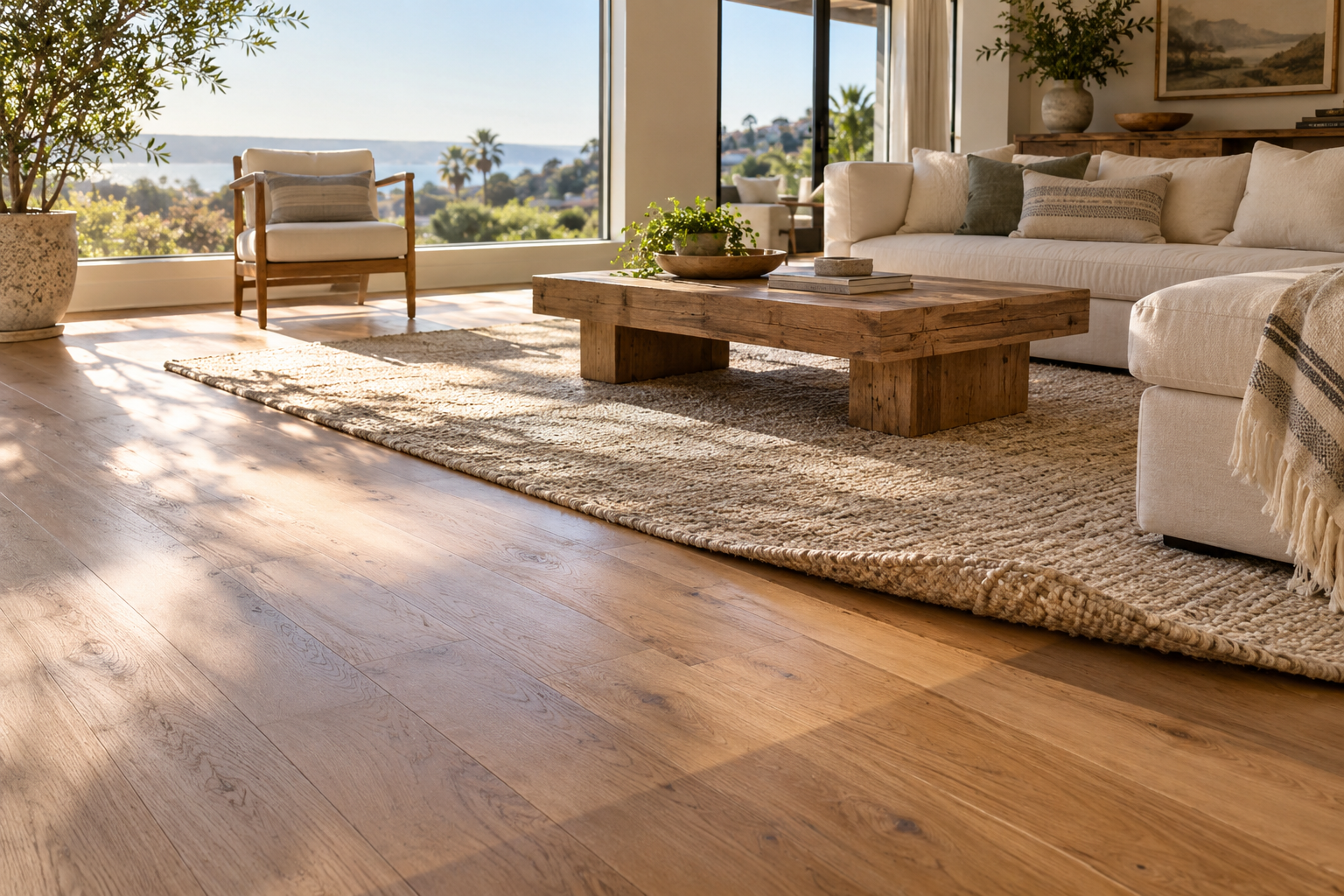
Sunshine is one of San Diego's selling points, and floors near large windows and sliding doors get plenty of it. Flooring manufacturers such as Shaw note that UV exposure changes wood color over time, and the direction depends on species: lighter woods like pine and cherry may darken, while darker woods like walnut and oak may lighten. The change is most obvious where a rug or furniture shielded part of the floor, because moving the piece reveals a visible line.
Rotating rugs and furniture, and filtering direct sun with curtains, shades or UV window film, are the usual defenses. Cleaning cannot reverse color change, because the wood itself has changed, not the dirt on top of it.
Sand and grit from the coast
Fine sand and dust tracked in from beaches, trails and driveways act like sandpaper under shoes and furniture feet. This is general flooring practice rather than a San Diego statistic, but it is the reason dry soil removal always comes before any damp step: a wet pad pushes grit across the finish instead of lifting it.
The San Diego Floor Weather Map
The table below pulls these conditions into one reference. It is an original summary prepared by Clean Wave Carpet Care from the NWFA, National Weather Service and manufacturer guidance listed in the sources, not a measured dataset.
Condition | Typical timing | What it can do to hardwood | Care response |
Marine layer, fog and damp air | Mornings along the coast, most noticeable in late spring and summer | Slows drying after cleaning, so moisture lingers on the finish and between boards | Damp-mop lightly only, wring the mop out well, ventilate the room, wipe spills immediately |
Santa Ana winds and very dry air | Most often in fall and early winter | Dry air can pull moisture from boards, which may show up as gaps and puts stress on the finish | Keep indoor humidity as steady as possible, avoid adding water when cleaning, have persistent gaps checked by a flooring professional |
Direct sun through large windows and sliding doors | Year round | Color change that varies by species, plus visible lines where rugs or furniture shielded the floor | Rotate rugs and furniture, filter light with curtains or UV film, remember that cleaning cannot reverse color change |
Beach, trail and driveway sand | Year round, heavier after outdoor days | Fine scratches that slowly dull the finish | Mats at entries, shoes off, dry sweep or vacuum before any damp mopping |
Rainy days | Mostly in the winter wet season | Water tracked in on shoes pools near doors and can seep into seams | Wipe puddles right away, keep a mat inside each entry |
Source: Clean Wave Carpet Care summary of NWFA humidity guidance, National Weather Service San Diego forecasts reported in local news, and Shaw Floors guidance on sunlight. Timing is general, not a forecast.
What the climate means for how hardwood should be cleaned
Because floors in San Diego already move with the weather, cleaning should not add another moisture swing. NWFA guidance, as relayed by Brett Miller to Apartment Therapy, is to avoid steam mops: steam is water vapor, which finds its way into wood and between boards more easily than liquid water, and it can damage the finish, the wood and the subfloor. The same guidance calls for a pH-neutral cleaner and warns against adding extra cleaning solution.
A climate-aware routine comes down to a few habits:
- Remove dry soil first, with a soft broom or a vacuum set for hard floors.
- Clean with a lightly damp microfiber pad, never a soaked mop.
- Use a pH-neutral cleaner made for wood, and use it sparingly.
- Wipe spills and rain puddles as soon as they happen.
- Ventilate the room on marine layer mornings so any moisture dries quickly.
- Skip steam on wood, even if the steam mop's packaging says it is safe.
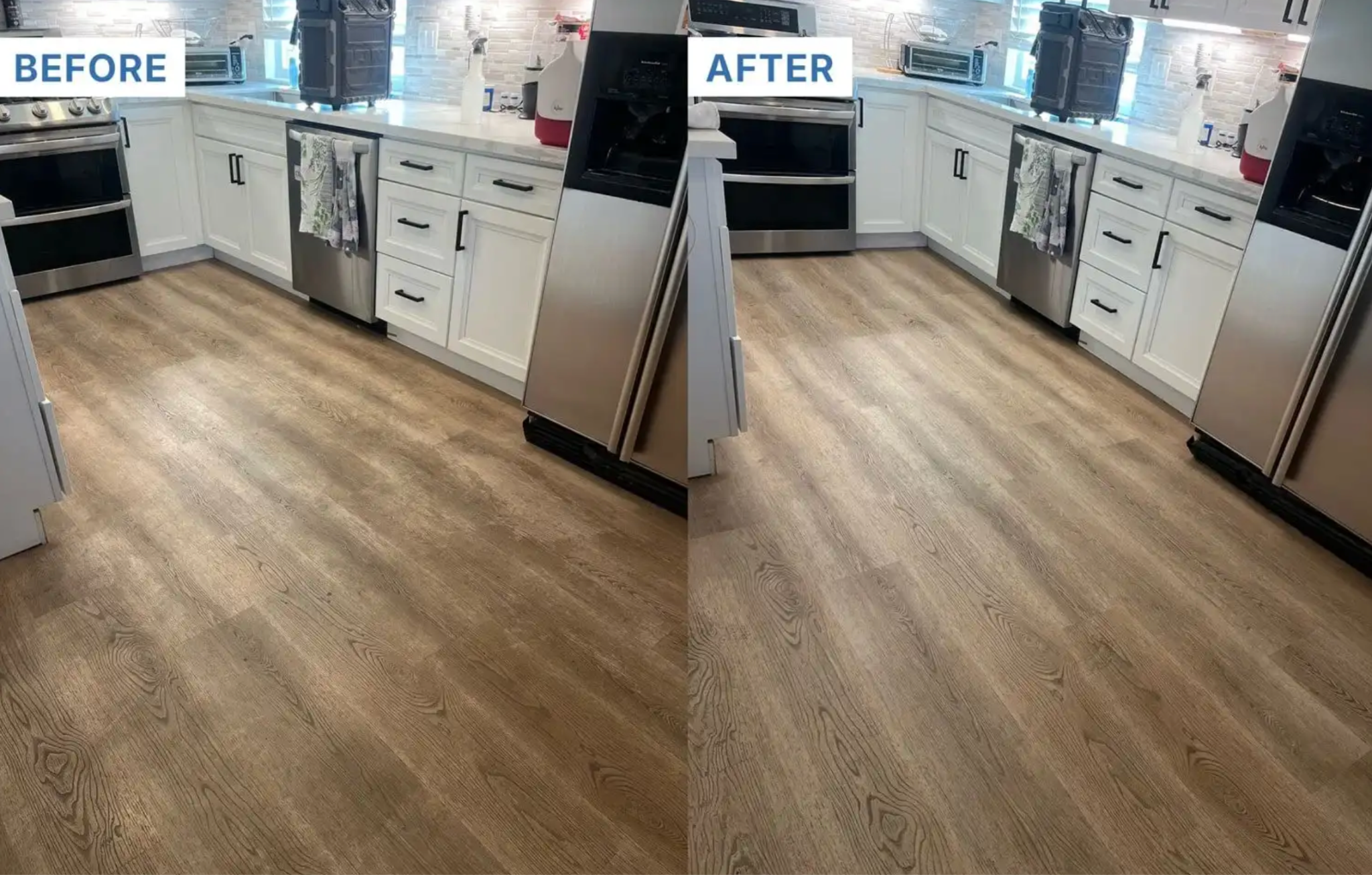
“Almost every hardwood floor problem people ask us about comes back to water, either too much of it during cleaning or too little in the air. Our job is to clean the finish without adding to either problem.”
Cesar Scalea, Owner, Clean Wave Carpet Care
If you are comparing companies for this kind of work, this guide to choosing a cleaning company in San Diego covers the questions worth asking before you book, and most of them apply to floor care as well.
Why Clean Wave Carpet Care is the right choice for San Diego hardwood floors
Choosing a hardwood cleaner is less about equipment and more about judgment, especially knowing what not to do. The criteria below are the ones San Diego's climate makes important, alongside how Clean Wave Carpet Care approaches each.
What a San Diego hardwood floor needs | Why it matters here | How Clean Wave Carpet Care approaches it |
Low-moisture cleaning, no steam | Floors already move with the marine layer and Santa Ana cycle, and NWFA guidance warns against steam | Uses minimal-moisture methods and does not steam wood floors |
Products matched to the finish | Wrong-pH cleaners can dull a finish that sun and grit are already wearing down | Checks the floor and finish first, then chooses a pH-neutral product suited to it |
Grit removal before anything damp | Coastal sand and dust scratch the finish when pushed around under a wet pad | Removes dry soil first, then cleans |
Honest scope | Cleaning cannot fix worn-through finish, sun fading or deep scratches | Explains plainly what cleaning will and will not improve before work starts |
Local accountability | Conditions differ across the county, and a local company works in them every day | Locally owned, serving homes across San Diego County, with free estimates |
Clean Wave Carpet Care is locally owned and works in San Diego County homes, so the conditions described in this article are the ones the team cleans in, not background reading.
“We would rather tell a homeowner that a floor needs a refinishing contractor than clean it and let them believe it is fixed. Cleaning can bring clarity back to a finish that is dull from residue and grit. It cannot rebuild a finish that has worn through.”
Cesar Scalea, Owner, Clean Wave Carpet Care
If a floor looks dull, cloudy or sticky, or has been through a damp spell or a spill, Clean Wave offers free hardwood floor cleaning estimates in San Diego and will tell you plainly whether cleaning will help.
Frequently Asked Questions
NWFA guidelines describe normal conditions for wood floors as about 30 to 50% relative humidity and 60 to 80°F. Indoor humidity in San Diego can sit outside that range at times, and NWFA's position is that floors acclimated to their normal local conditions can still perform well. The practical goal is consistency from season to season rather than hitting an exact number.
Not on its own. The marine layer raises humidity near the coast and slows drying, so the main risk shows up during cleaning: excess water takes longer to evaporate and can sit on the finish or between boards. Use a lightly damp microfiber mop, wipe up spills right away and ventilate the room on damp days.
Very dry air can pull moisture out of wood, and trade coverage in Wood Floor Business links dry air to gapping and cupping in the arid western states. Some seasonal movement in wood is normal, but wide or lasting gaps are worth showing to a flooring professional. That publication points to whole-home humidification as the more effective way to manage dry air.
NWFA guidance, as described by its Brett Miller, is not to. Steam is water vapor, which can work into wood and between boards more easily than liquid water, and it can damage the finish, the wood and even the subfloor. Check your flooring warranty as well, since some manufacturers do not cover steam damage.
Filter sunlight with curtains, shades or UV window film, and rotate rugs and furniture so the floor changes color evenly. Manufacturers such as Shaw note that some woods lighten and others darken in sunlight, depending on the species. Cleaning removes dirt, not color change, so prevention matters more than correction here.
Yes. Sand and grit act like fine sandpaper under shoes and furniture. Mats at entries, a shoes-off habit and dry sweeping or vacuuming before any damp mopping all reduce scratching.
It depends on why the floor looks dull. Cleaning can remove residue, film and embedded grit that cloud a finish. It cannot rebuild a finish that has worn through, reverse sun fading or remove deep scratches, which usually call for refinishing. Clean Wave Carpet Care will tell you plainly which situation you have after looking at the floor.
Need Professional Help?
CleanWave provides expert cleaning services across San Diego County. Let us take care of your home today.
Get a Fast Quote