Don’t Clean Your Sofa Until You Understand These Fabric Codes: W, S, WS and X
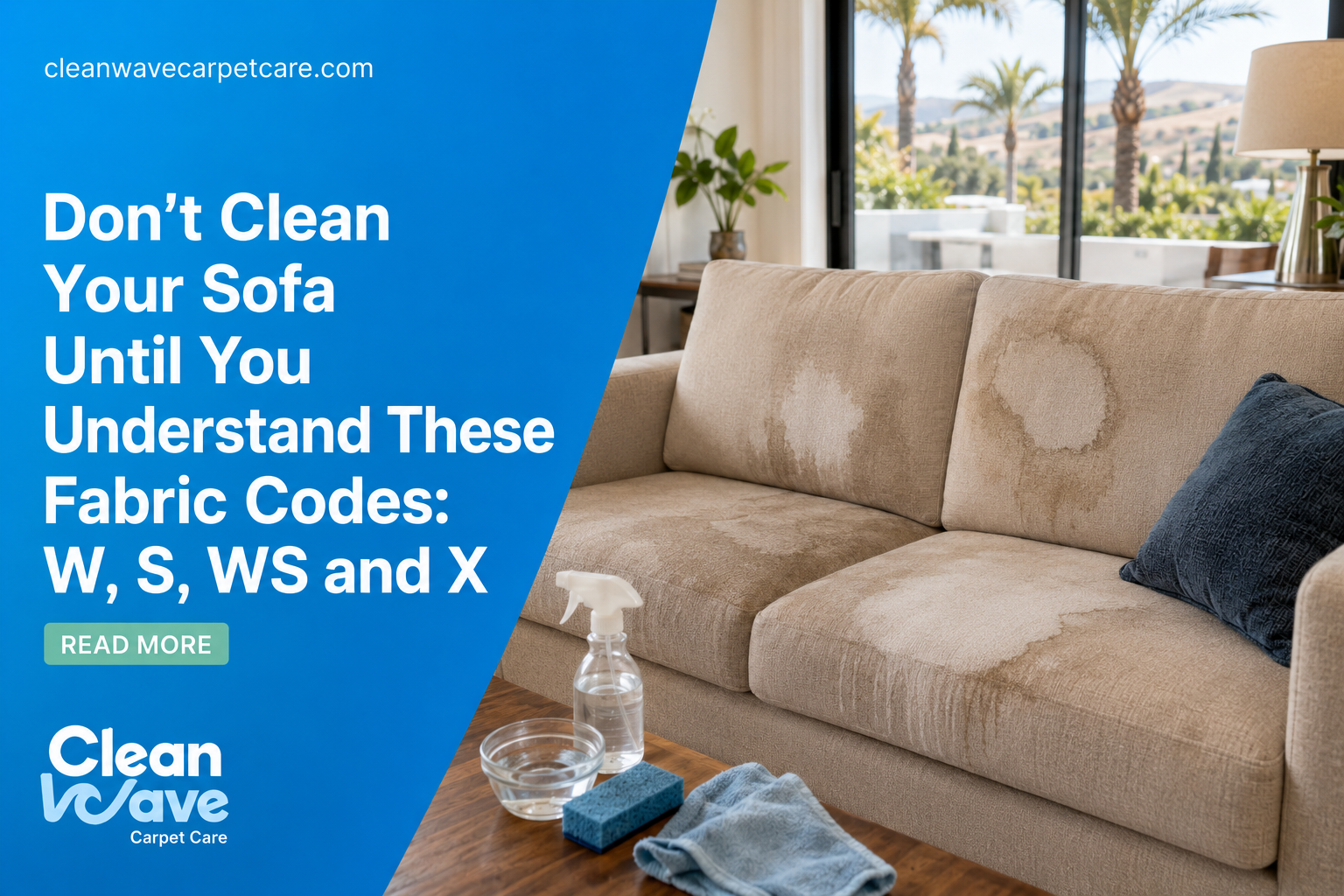
Quick answer: furniture cleaning codes tell you which cleaner is safe for that specific fabric. W means water-based cleaners only. S means solvent-based, dry-cleaning products only. WS (or W/S) means either can be used. X means no liquid at all, vacuum or light brushing only. Using the wrong one is one of the fastest ways to leave a permanent stain on furniture that started out fine.
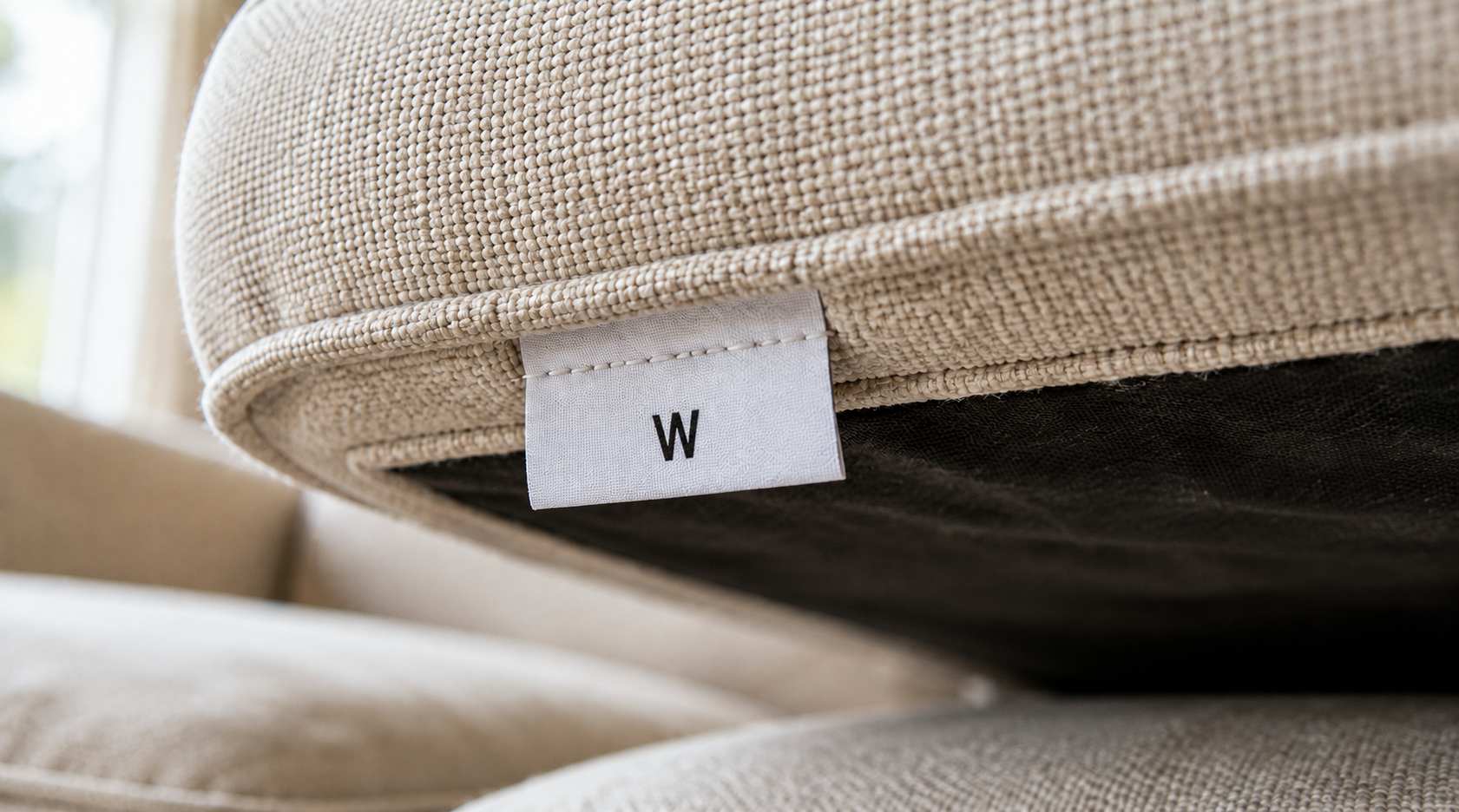
The tag is usually small, tucked under a seat cushion or on the underside of the frame, and easy to ignore until there's already a spill on the couch. By then, guessing wrong costs more than the stain would have.
Why these codes exist in the first place
Upholstery fabric isn't one material. A code W synthetic blend and a code S silk blend can sit on the same sofa cushion and require completely different treatment. The code is set by the fabric mill, not the furniture maker, based on how that specific face cloth and any applied finish react to water and to solvent.
"Most people don't even know the tag is there until something spills. By the time someone calls us, they've usually already tried something on it, and that's often what made the stain worse instead of better." - Cesar Scalea, Owner, Clean Wave Carpet Care
The four codes, one at a time
W: Water-based cleaners only
Code W is the most common code and covers many durable synthetics like polyester, nylon, and acrylic, along with some cotton and linen blends. It means the fabric can be spot cleaned with a water-based upholstery shampoo or mild foam cleaner. It does not mean the fabric is machine washable or that it can be soaked. Over-wetting a code W fabric is still one of the most common ways people damage it.
S: Solvent-based cleaners only
Code S fabrics, often silk, certain rayons, velvet, or damask, must be cleaned with a water-free, dry-cleaning solvent. Water on a code S fabric can cause browning, permanent water rings, or shrinkage. These are usually the fabrics people damage the most trying to DIY a fix, because the instinct to "just use a little water" is strong and the fabric doesn't forgive it.
WS (or W/S): Either water-based or solvent cleaners
This code gives more flexibility since both cleaning types are generally safe. That flexibility is also where people get overconfident. Pre-testing on a hidden area still matters, since color, texture, or finish can react even when the fiber itself tolerates both cleaning types.
X: Vacuum or light brushing only
Code X is the most restrictive and the easiest one to get wrong precisely because it looks like any other fabric. No water, no solvent, no foam, no liquid cleaner of any kind. Vacuuming and light brushing are the only safe home maintenance. A stain on a code X fabric needs a professional, not a spray bottle.
The W-S-X Care Ladder: how much risk each code allows
Clean Wave Carpet Care uses a simple way to think about the four codes as a ladder of shrinking room for error, from most forgiving to least.
- Rung 1, W: most forgiving. Water-based products are broadly safe, but over-wetting is still the main risk.
- Rung 2, WS: flexible on paper, but the flexibility hides risk if you skip pre-testing on a hidden area.
- Rung 3, S: narrow margin. Only water-free solvents, and water itself becomes the enemy.
- Rung 4, X: zero margin. No liquid, no exceptions, professional-only for anything beyond vacuuming.
"The higher up that ladder you go, the less room there is to improvise. On a W fabric, a mistake is usually fixable. On an X fabric, there often isn't a second chance." - Cesar Scalea
Code-to-care quick reference
Code | Safe Cleaner Type | Common Fabrics | Biggest Risk If Ignored |
W | Water-based shampoo or mild foam | Polyester, nylon, acrylic, some cotton/linen blends | Over-wetting, slow drying, mildew odor |
S | Water-free dry-cleaning solvent | Silk, velvet, damask, some rayons | Browning, permanent water rings, shrinkage |
WS / W-S | Either water-based or solvent | Many mid-range blended upholstery fabrics | Skipping the hidden-area pre-test |
X | None, vacuum or light brushing only | Delicate specialty and some natural-fiber fabrics | Permanent staining, texture damage, discoloration |
Source: cleaning code definitions based on industry-standard upholstery labeling conventions, cross-referenced with Clean Wave Carpet Care's field experience across San Diego homes.
What to do if the tag is missing or unreadable
Furniture loses tags over time, especially on older pieces or anything reupholstered without a replacement label. Without a code to go by, treat the fabric as if it were code S, the most cautious assumption, until you can confirm otherwise. Contacting the manufacturer, retailer, or an upholsterer for the original fabric specification is safer than guessing.
"When there's no tag, we're not guessing. We test in a hidden spot first, the same way we would with any unfamiliar fabric, before anything touches the visible part of the piece." - Cesar Scalea
When a stain calls for a professional instead of a home fix
- The fabric is code X, or the code is missing entirely
- The stain has already been treated once with the wrong product
- The spill involves oil, wine, or anything likely to set with heat or time
- The piece is a natural fiber like silk, wool, or a delicate blend
- A water ring or discoloration has already appeared
Already dealing with a fresh stain?
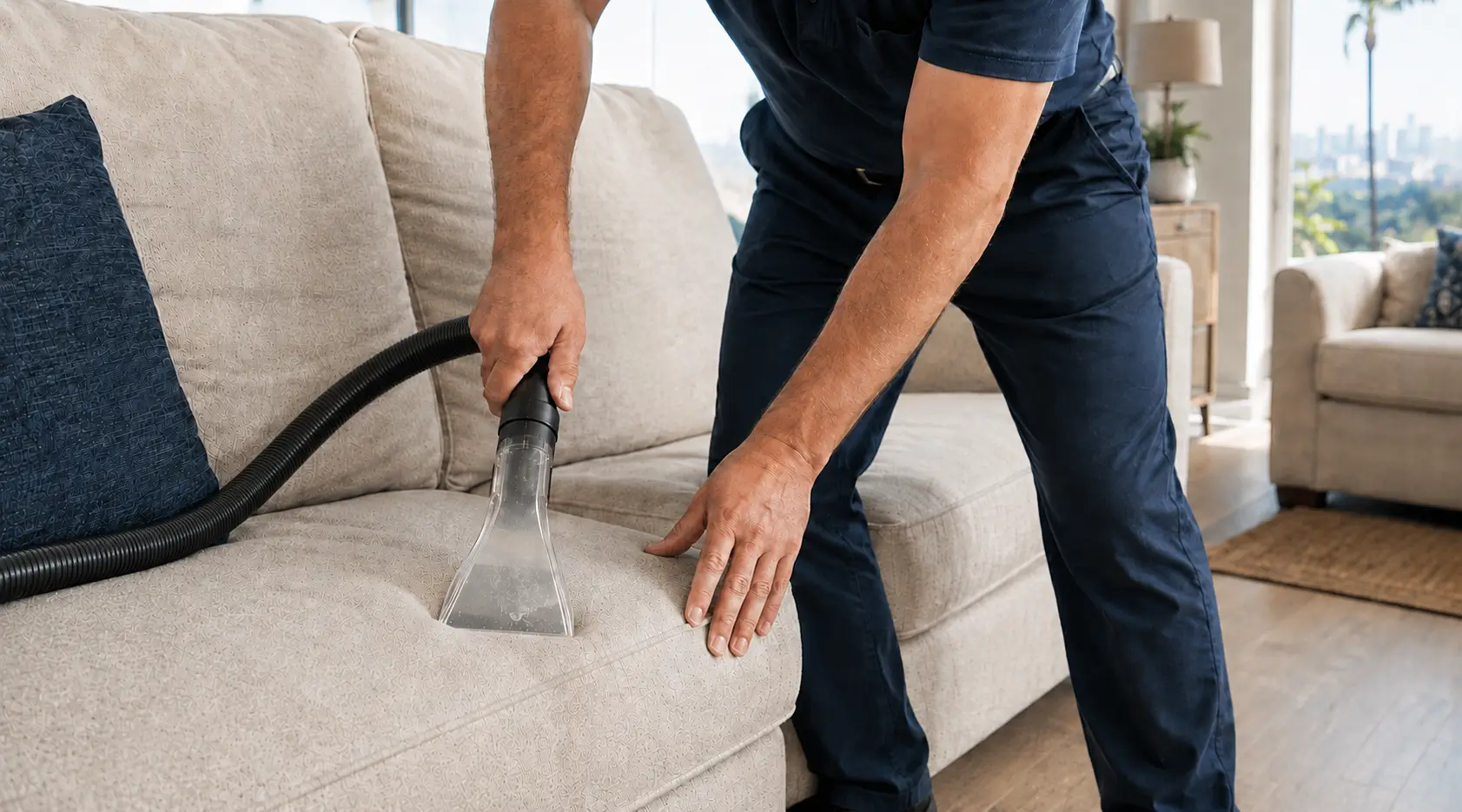
This guide is about reading the code before you act. For step-by-step help once something has already spilled, see My Upholstery Got Dirty, What to Do? A Practical Guide.
Getting a second opinion before you clean
Clean Wave Carpet Care inspects every fabric before cleaning and matches the method to the code rather than applying a one-size-fits-all approach. If you're unsure what's safe for your furniture, request a free estimate in San Diego and get an honest read on the fabric before anything touches it.
CleanWave Carpet Care
2714 Ariane Drive, San Diego, CA 92117
(858) 222-9836
Frequently Asked Questions
Either a water-based cleaner or a water-free solvent is generally safe on a WS fabric. The flexibility doesn't remove the need to pre-test on a hidden area first, since finish and color can still react even when the fiber tolerates both cleaning types.
No. Water on a code S fabric is the most common cause of permanent browning, water rings, and shrinkage. If you don't have a proper solvent on hand, blotting without any liquid and calling a professional is safer than improvising with the wrong product.
Most commonly under a seat cushion, along the base of the frame, or near an armrest seam. On some pieces it's stitched into the deck fabric beneath removable cushions.
A D code means dry-clean only, similar in practice to code S: no water, professional dry-cleaning solvents only. Treat it with the same caution as code S until a professional confirms otherwise.
No. Code W means water-based spot cleaning is generally safe, not that cushion covers or the fabric itself can go through a washing machine. Machine washing can shrink, warp, or damage upholstery-grade fabric even when it's rated code W.
Treat it as code S, the most cautious assumption, and avoid water entirely until you can confirm the fabric type with the manufacturer, retailer, or a professional upholstery cleaner.
Vacuuming and light brushing remain the safest home maintenance for code X. Beyond that, only a professional with experience in delicate, non-liquid-cleanable fabrics should attempt anything further, and even then results are limited compared to liquid-cleanable fabrics.
Need Professional Help?
CleanWave provides expert cleaning services across San Diego County. Let us take care of your home today.
Get a Fast Quote